


O-TRACKR is a screenless timer that enables orienteers to train against themselves.
ROLE
Solo Designer
CONTEXT
Second-Year Studio
DURATION
7 Weeks, Spring 2026
ADVISOR
Thomas Clifton
Overview
Design a screenless timer for a recreational activity.
THE BRIEF
Design and build an innovative timer that focuses on tracking the performance of a user as they do sports or recreational activities.
THE CONSTRAINTS
Build 2 prototypes for this project. One to demonstrate the look and feel of the product, and one that shows the product function. The functional model should use no screens and should clearly show distinct stages of timing output.
Research
I scoured online forms and interviews to learn more about orienteering.
What is Orienteering?
Orienteering is an all-terrain outdoor foot race sport.
Runners must navigate the course with a map and compass.
Races are won with smart route selection, not raw speed.
How Can I Help?
Solo training is often done at permanent courses.
It can be difficult to track progress between runs at these courses.
Current tools rely on expensive infrastructure, finicky GPS, or clunky phone apps.

This product will make improvements visible by recording leg times at permanent courses, tracking time loss against personal benchmarks and giving non-obtrusive, real-time visual feedback on leg time compared to inputted benchmarks through ambient LED cues. Additionally, times will be measured with a manual trigger to confirm each control (checkpoint) time with more precision than GPS and times can be exported to use with other analysis software.
Development
Defining the function and form.
MOOD & INSPIRATION BOARD
I assembled a mood / inspiration to guide the visual development of the product. This focused on 3 elements:
RUGGED OUTER SHELL
MAP / COMPASS MOTIF
LED ILLUMINATION


will improve this— need higher quality scans
OR- do stage an image of a table filled with the sketches and writing notes on details?
Could also stage image with the compass to emophasize compass inspiration


Prototyping
Making it real.
FUNCTIONAL MODEL
During concept generation, I was working on my functional model to inform design decisions for my look-and-feel model.
COMPONENTS:
MOTOR WITH ENCODER, BUTTON, LED RING, ARDUINO CONTROL


MOCKUP 1
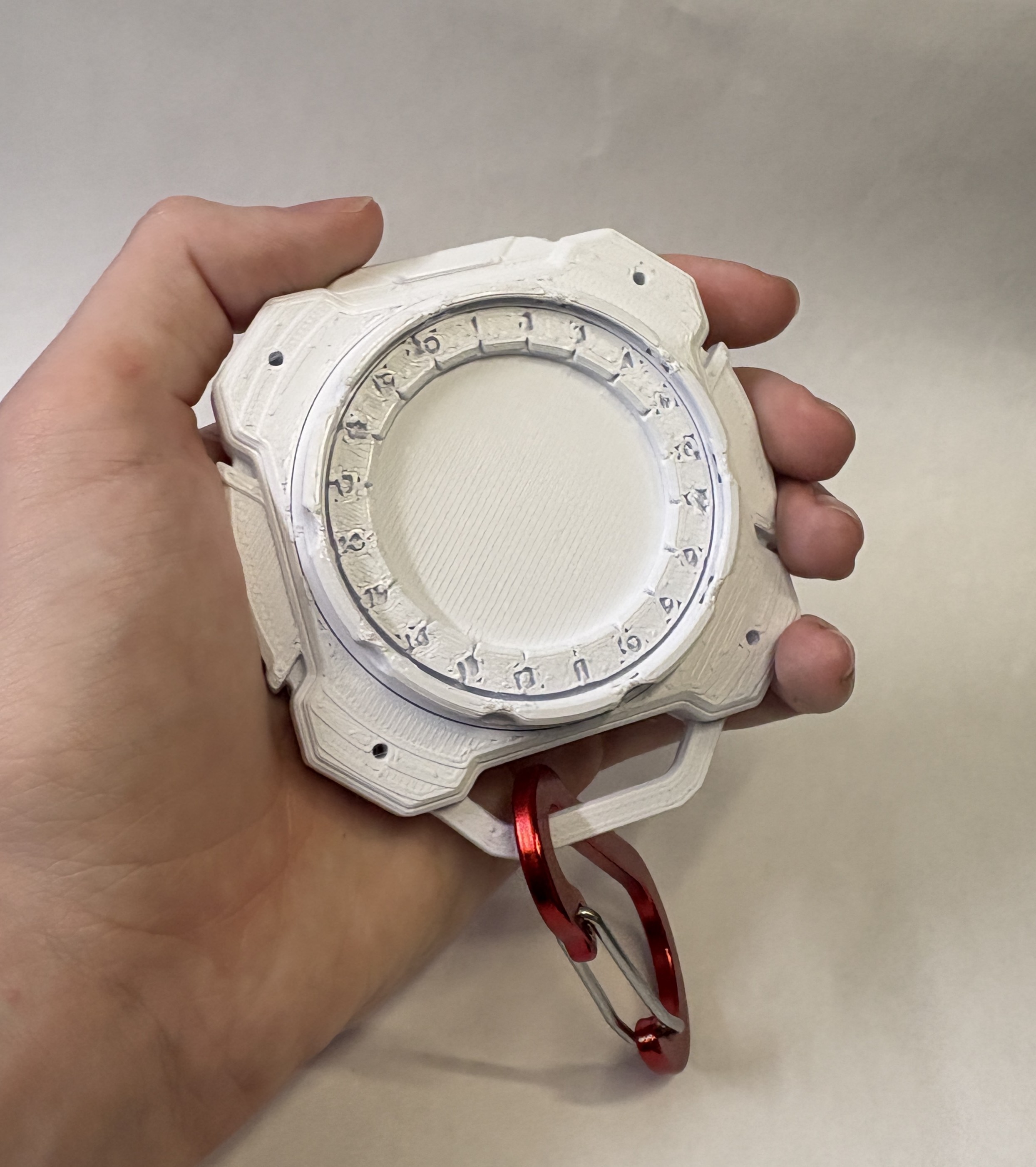
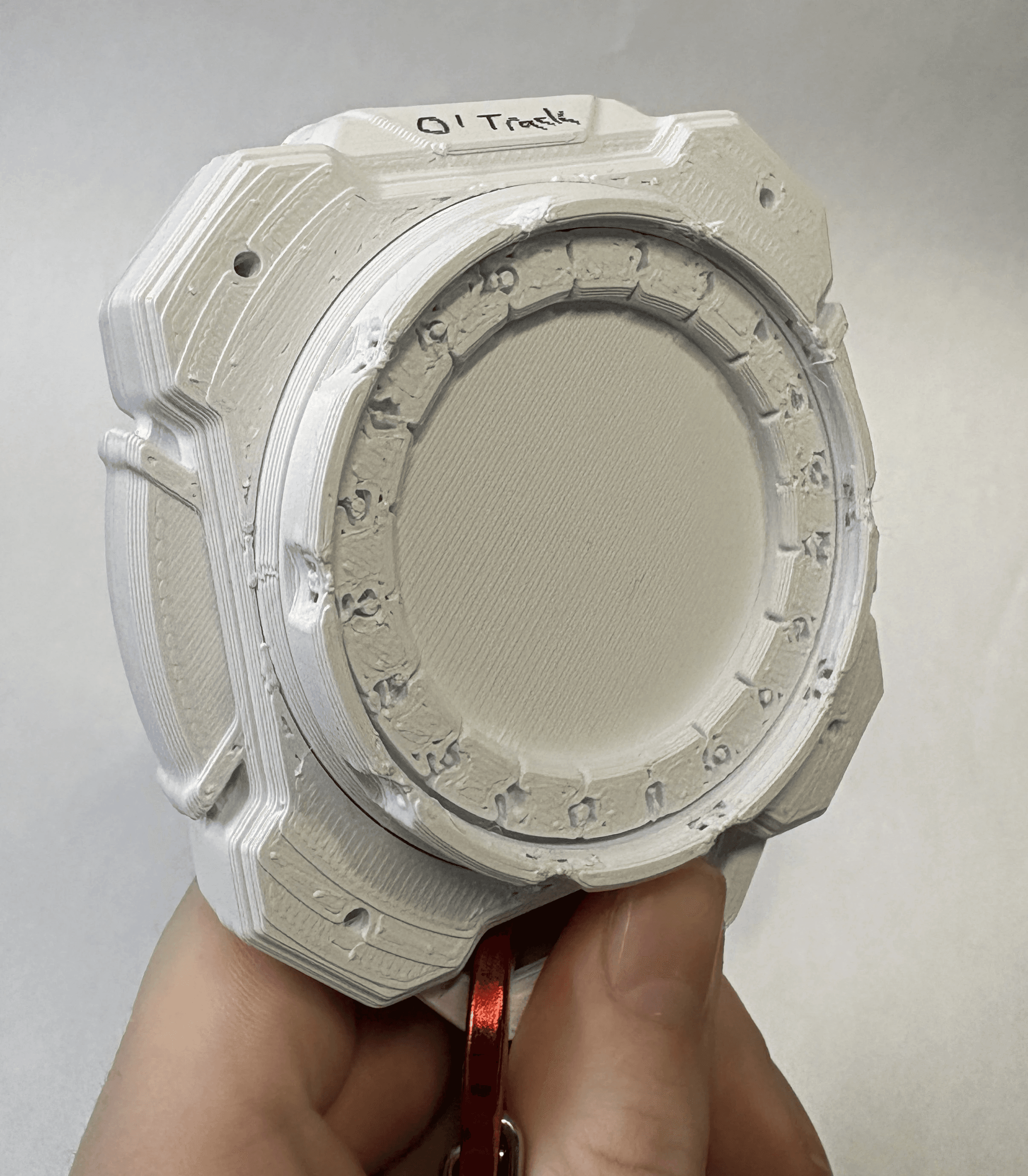
The first physical prototype was rather uncomfortable to hold. Too thin and too wide/tall.
ERGONOMIC TESTING
I tested an array of foam core mockups to determine the best size and thickness before jumping back into CAD.


FINAL PROTOTYPE
Throughout the process, I designed the components with manufacturing and assembly in mind.

better image coming soon - Ideas on what that image could be?
FINAL PROTOTYPE
For my last prototype, I 3D printed and painted a full model to ensure the parts fit together and looked cohesive.


Final
An innovative timer for orienteering.
MANUFACTURING
I made a valiant effort to simulate injection molding by 3D-printing resin molds, which I would then cast using Smooth-On Smooth-Cast 300, a two-part liquid resin that sets quickly.
I practiced with a test mold, understanding the material properties and dye amounts.
I then made a few attempts at casting the timer parts. With each attempt, I learned more about how my mold needed to be constructed to allow for a successful, bubble-free casting where parts come out smoothly.
In the beginning, I was just pouring the resin into the top of the mold, but I learned that if I wanted to remove air bubbles, I'd need to use more pressure, so I switched to a syringe that fills the mold from the bottom.
I still need to make some changes for a successful result. Attempt 3 coming soon!


FINAL MODEL
For now, I properly 3D printed and finished my final model. Presenting: O-TRACKR


need a better render
need a render

Animated?
FUNCTIONAL MODEL
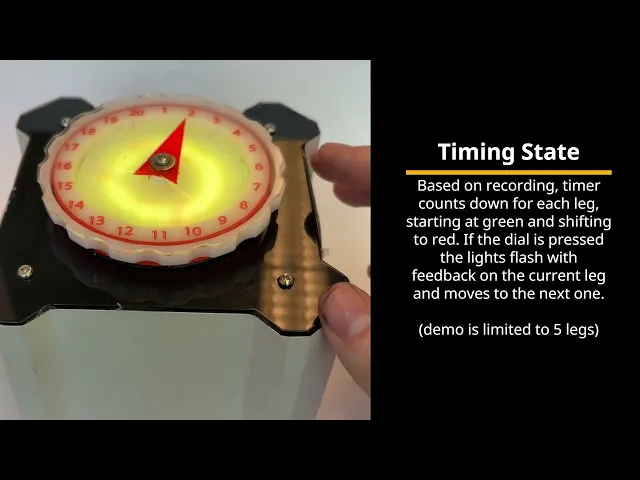
I built a functional model to demonstrate the basic timer interaction and functionality.