Overview
THE BRIEF
Design a fun toy that teaches an important learning concept that is age-appropriate for 4-, 5-, 6-, or 7-year-old children. The toy must be designed to be age-appropriate, fun, and fit the scale of the child.
THE CONSTRAINTS
With 5.5 weeks and an open brief, I set my own goal of having a working prototype as early as possible so I’d have time to iterate as the system and scope grew.
ROLE
Solo Designer
CONTEXT
Second-Year Studio
DURATION
5.5 Weeks, Fall 2025
ADVISOR
Thomas Clifton
Research
SECONDARY RESEARCH · MARKET RESEARCH
DEVELOPMENT GOALS
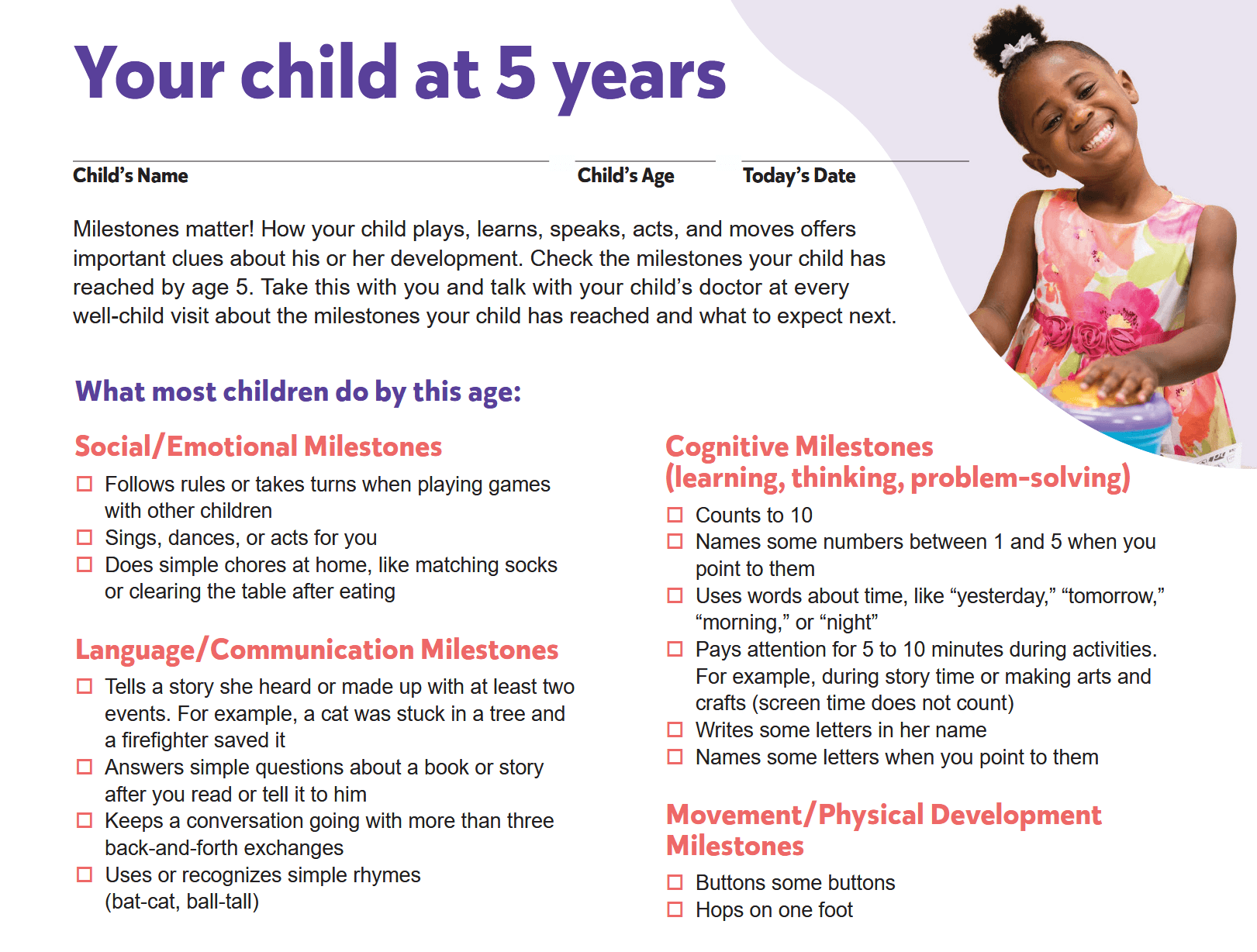
My research focused on how kids develop at different ages. I targeted 6–7 because I wanted to help build logic and an understanding of the world around them.
The CDC’s milestones stop at age 5, but one guideline stuck with me: ask kids “why?” and “how?” about what they’re building, and give them toys that encourage putting things together.


Development
SKETCHING · CONCEPT BOARDS · DECISION MATRIX
INITIAL IDEATION
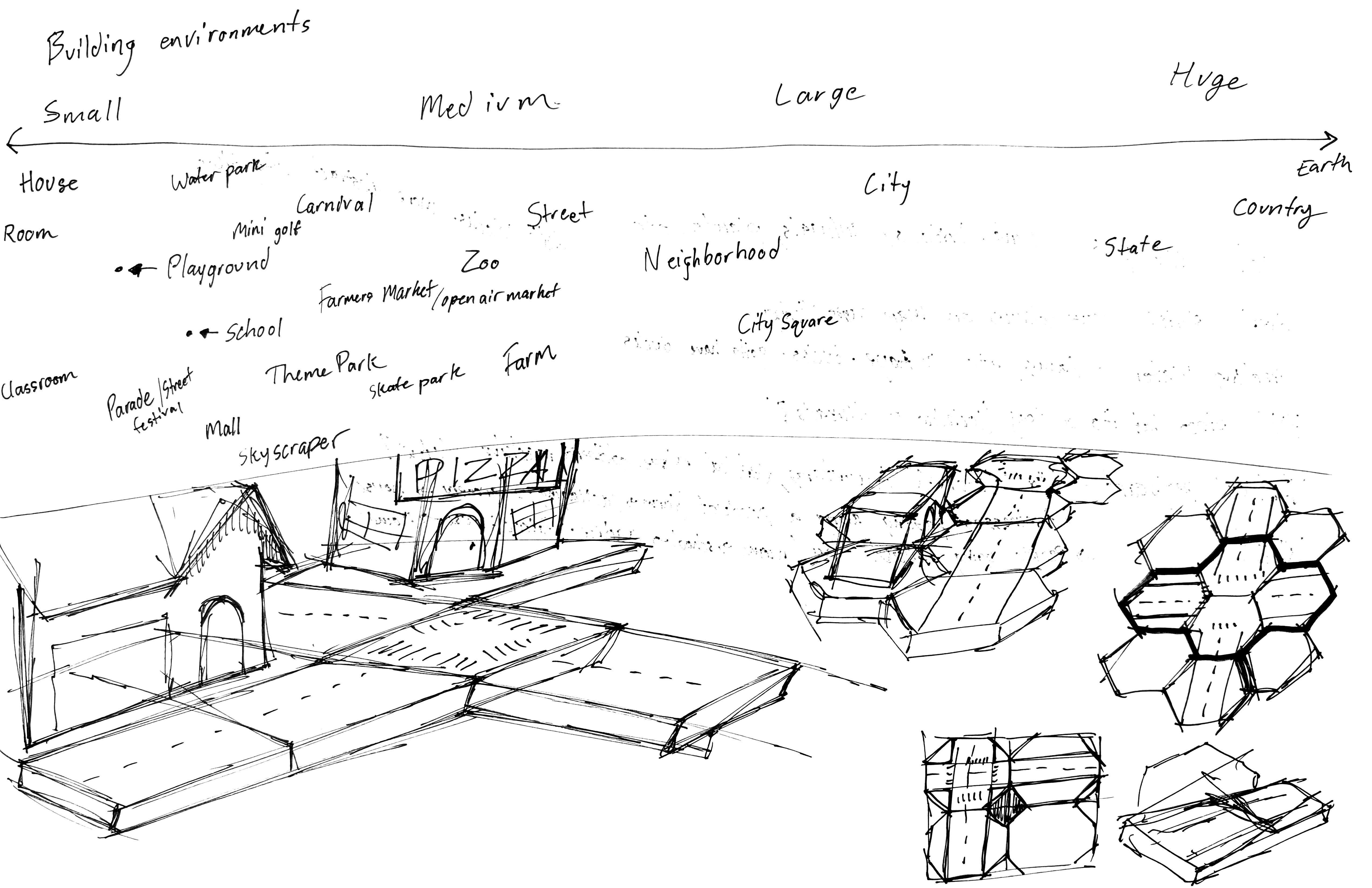
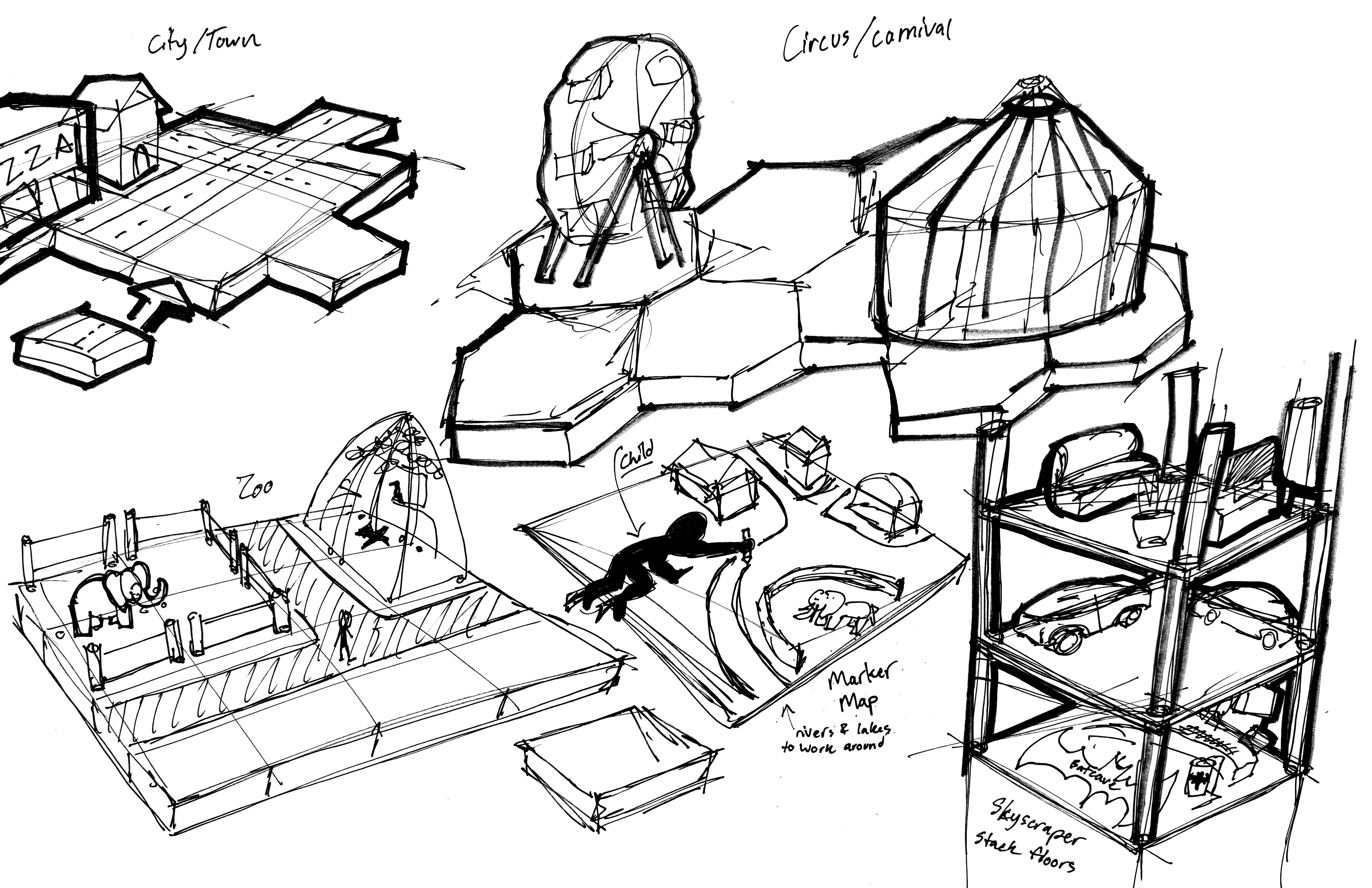
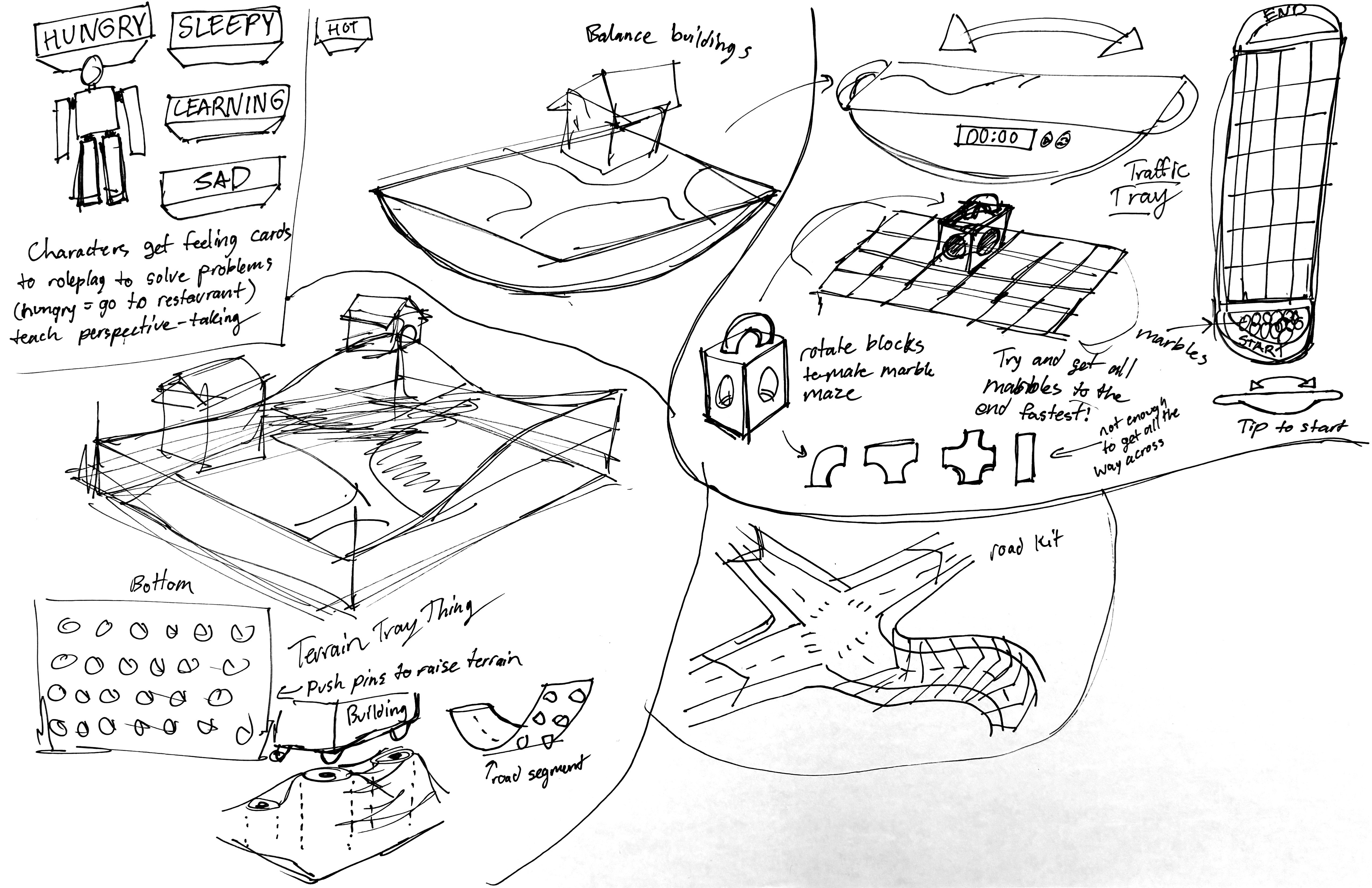
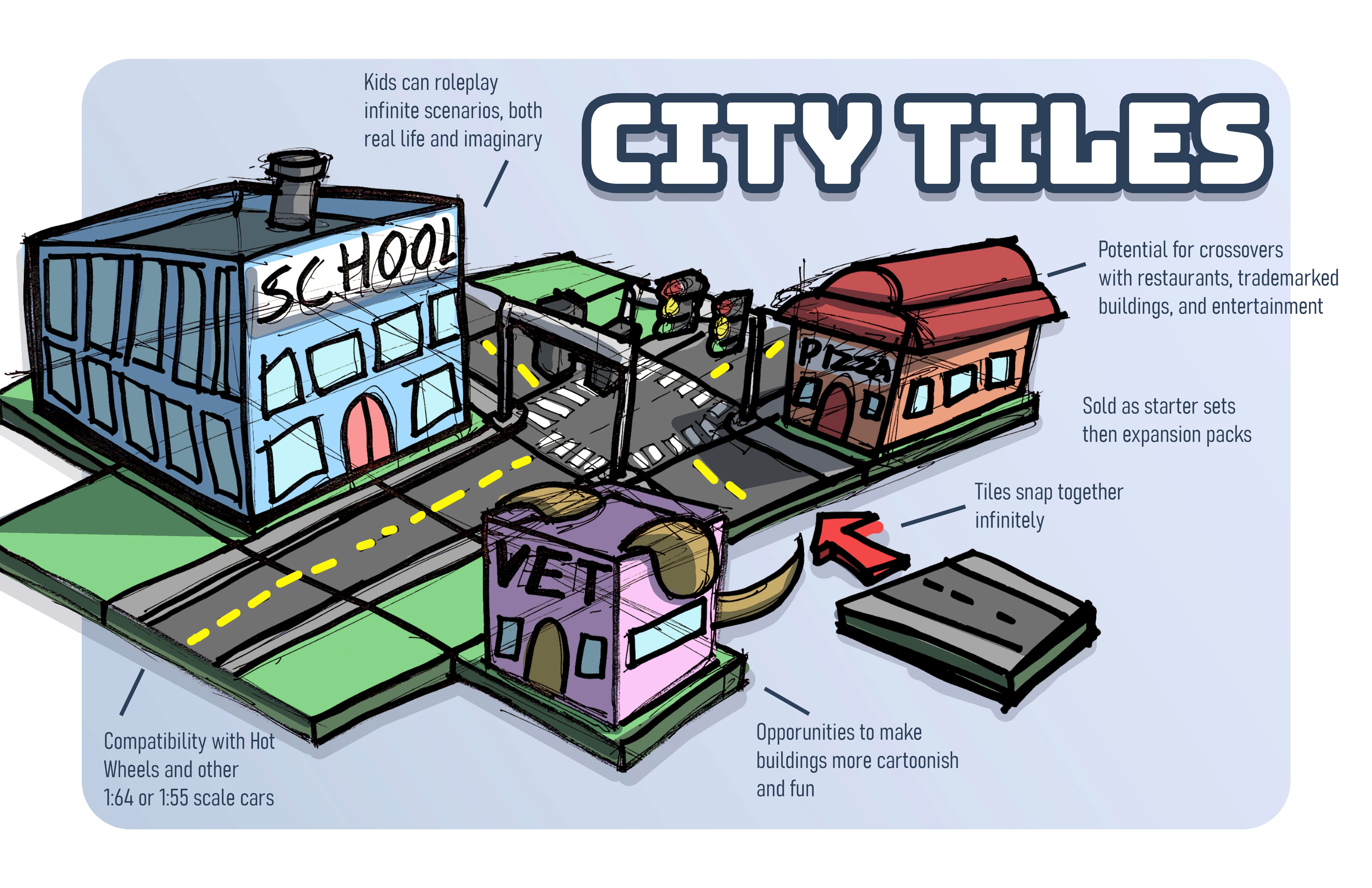
I set out to build spatial reasoning for ages 6–7, sketched broadly, then developed 5 concepts to choose between.
20+
SKETCHES
5
CONCEPTS
← DRAG TO EXPLORE →
SELECTED
04 · AqueDucks
01 · City Tiles

02 · Mega Map

03 · Traffic Tilt

05 · Snap-Sails
THE DECISION
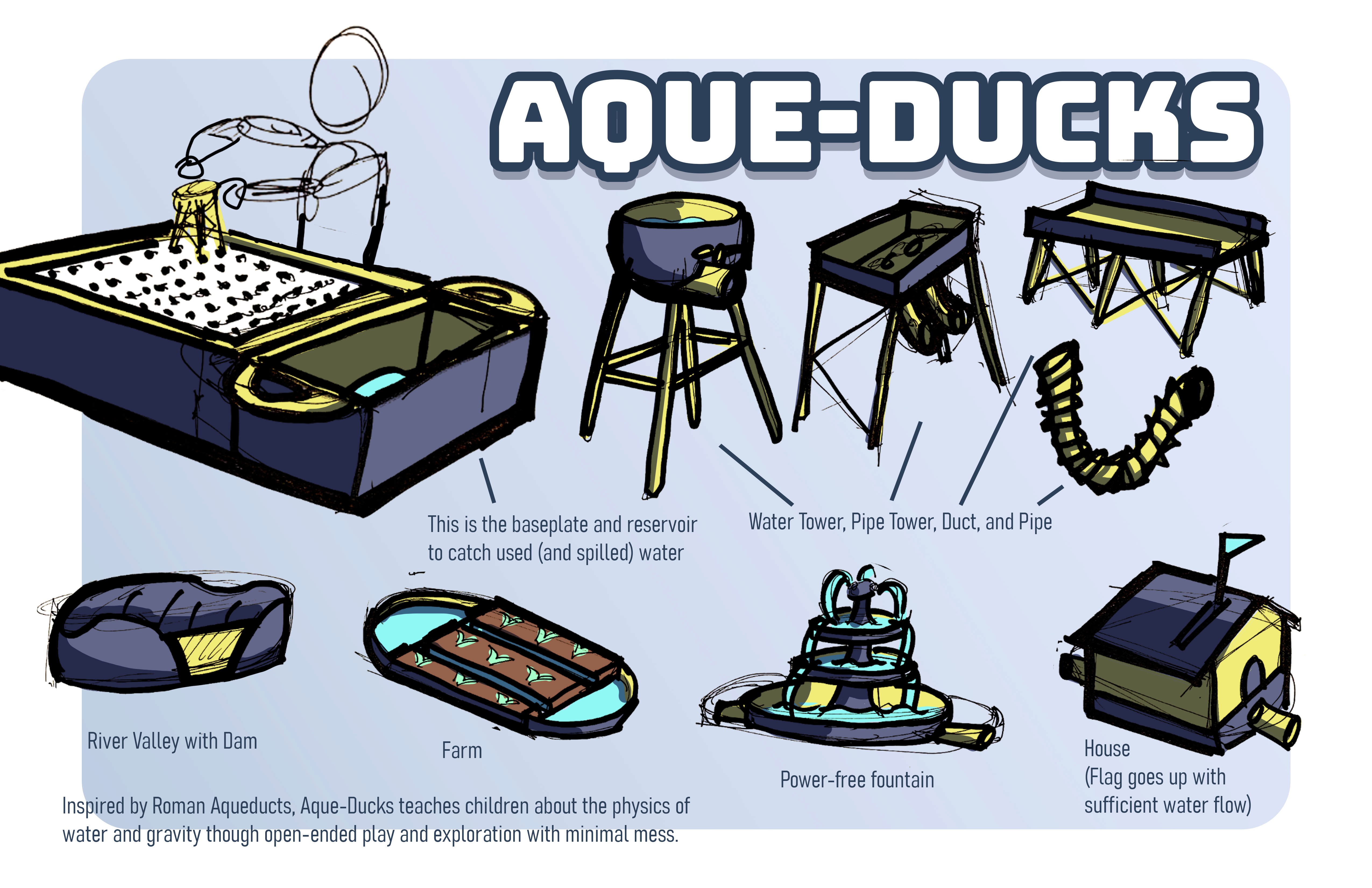
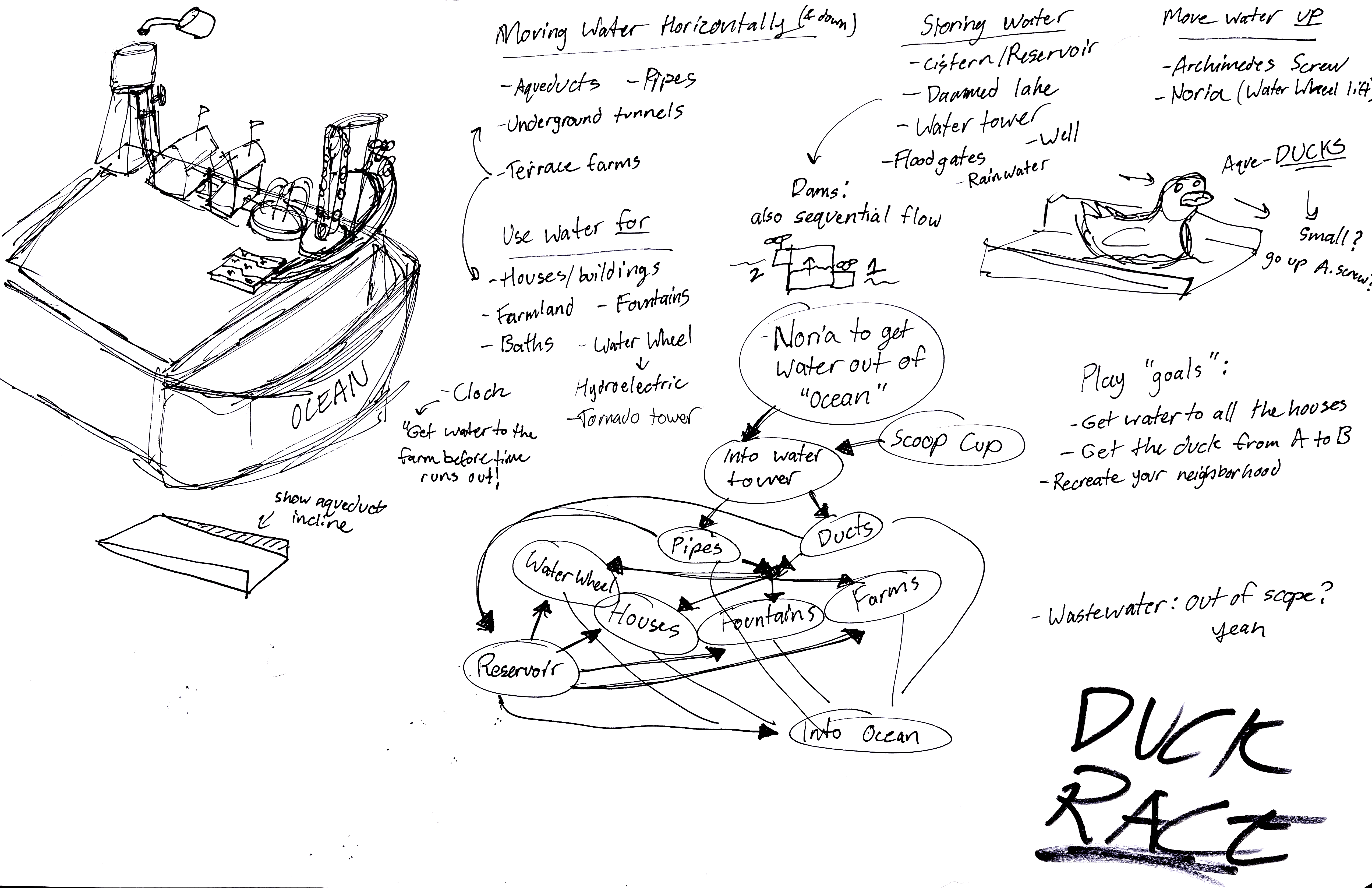
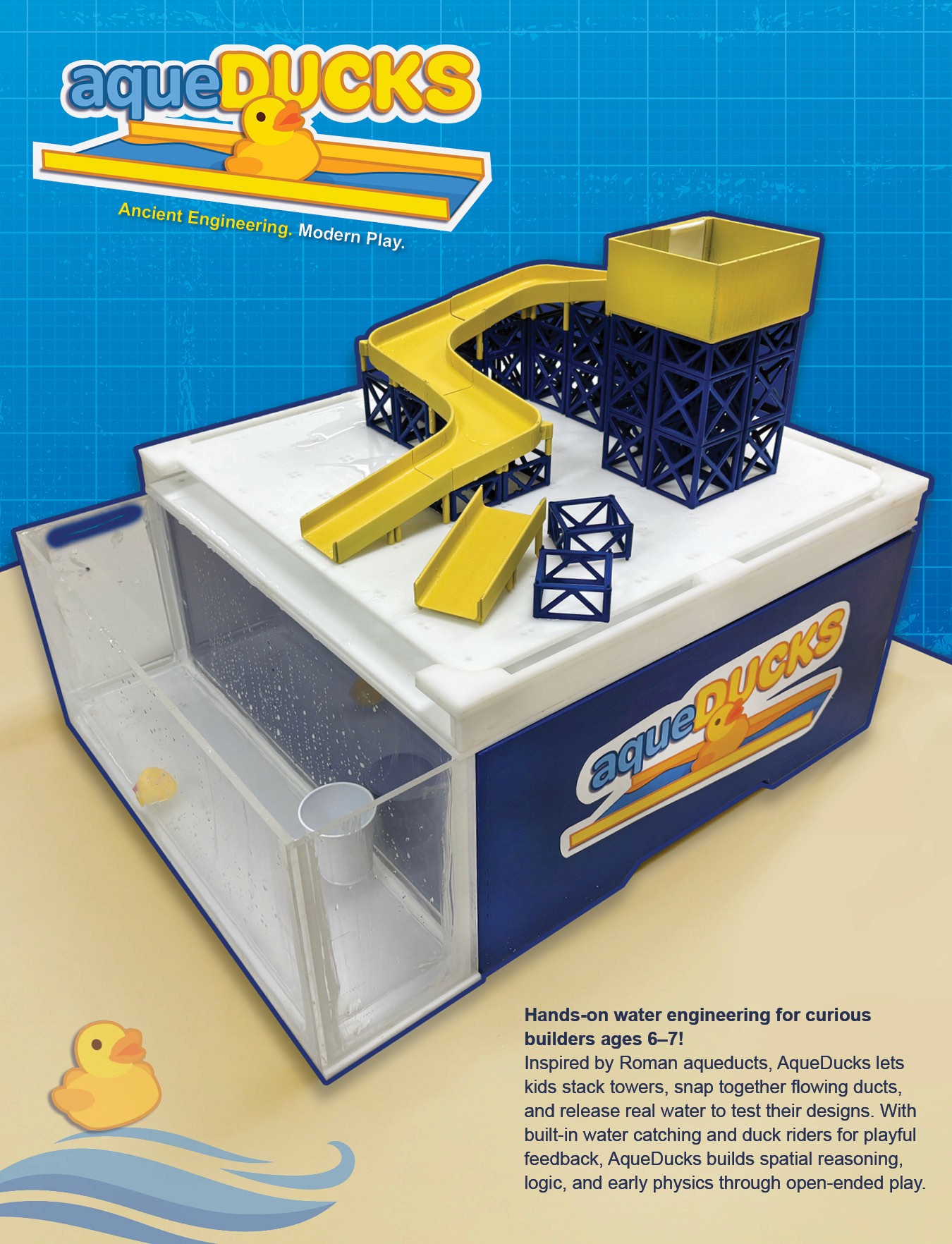
I chose AqueDucks because it was the most unique. Kids build a Roman aqueduct-inspired path to carry water downhill, learning water physics along the way, with rubber duckies riding the current to keep it fun.
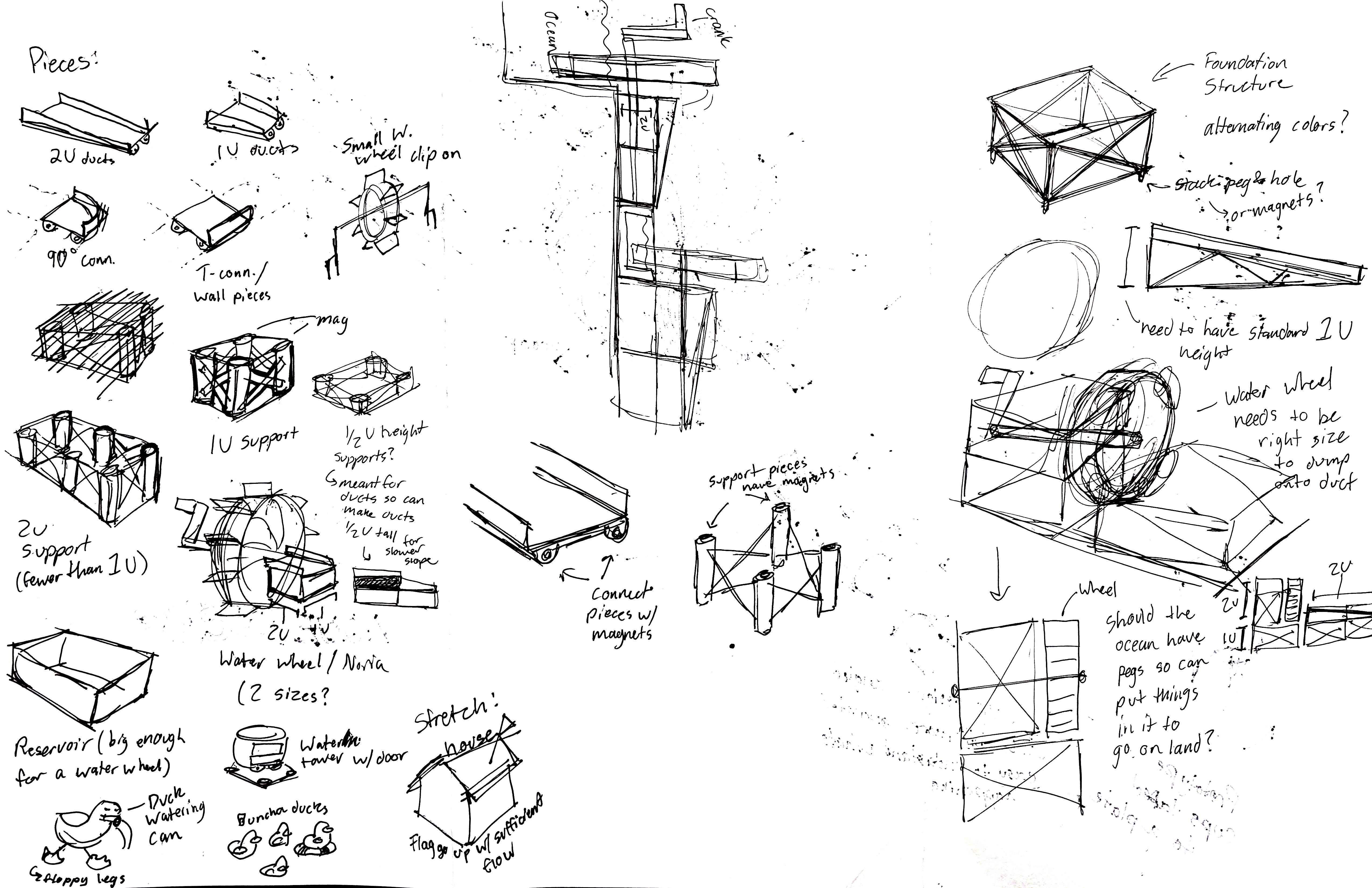
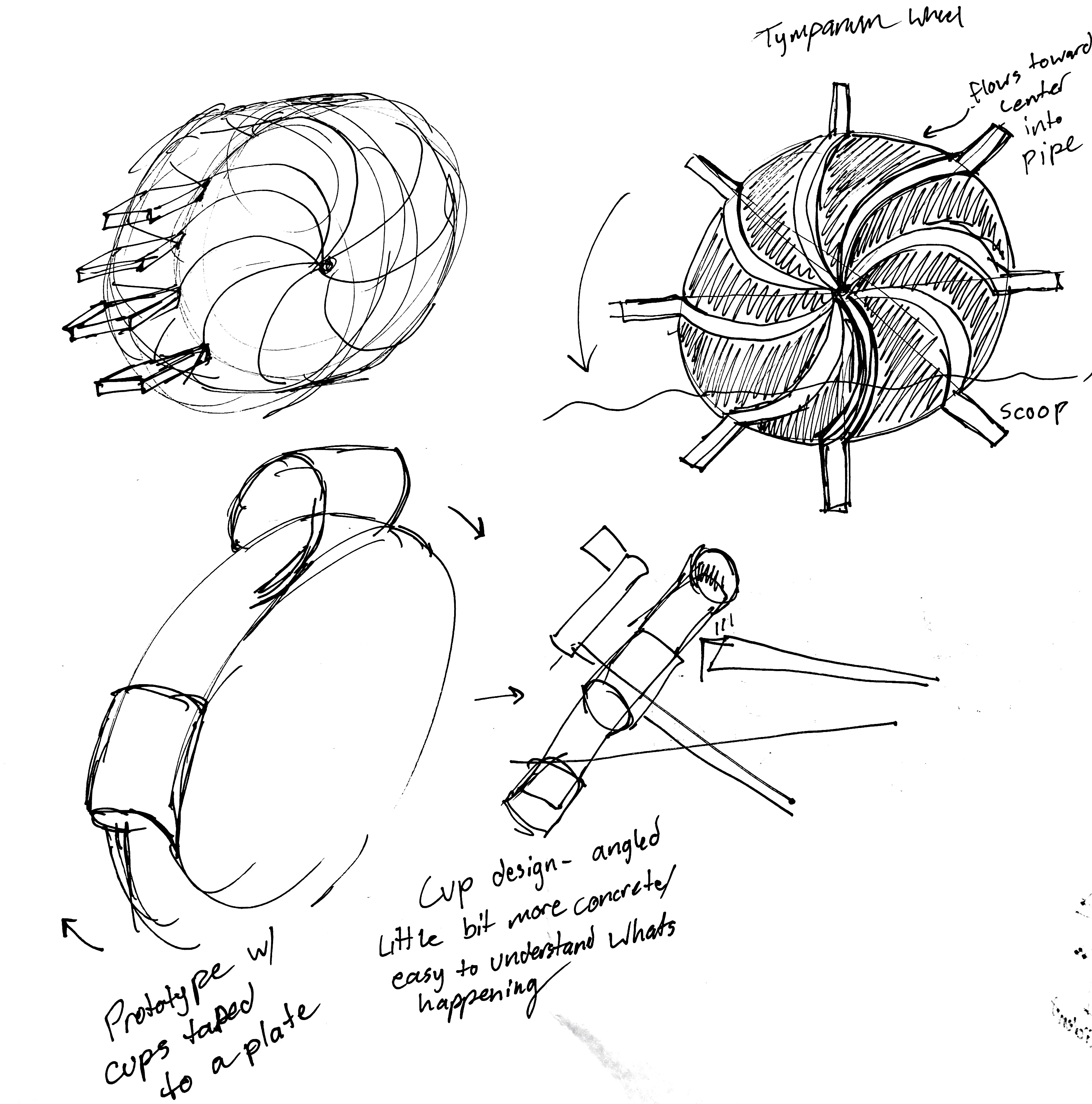
With a tight deadline, I started with the bare minimum set of parts and built up from there.
← DRAG TO EXPLORE →
Prototyping
AUTODESK FUSION · FDM PRINTING · TPU · LASER CUTTING
QUICK ITERATION
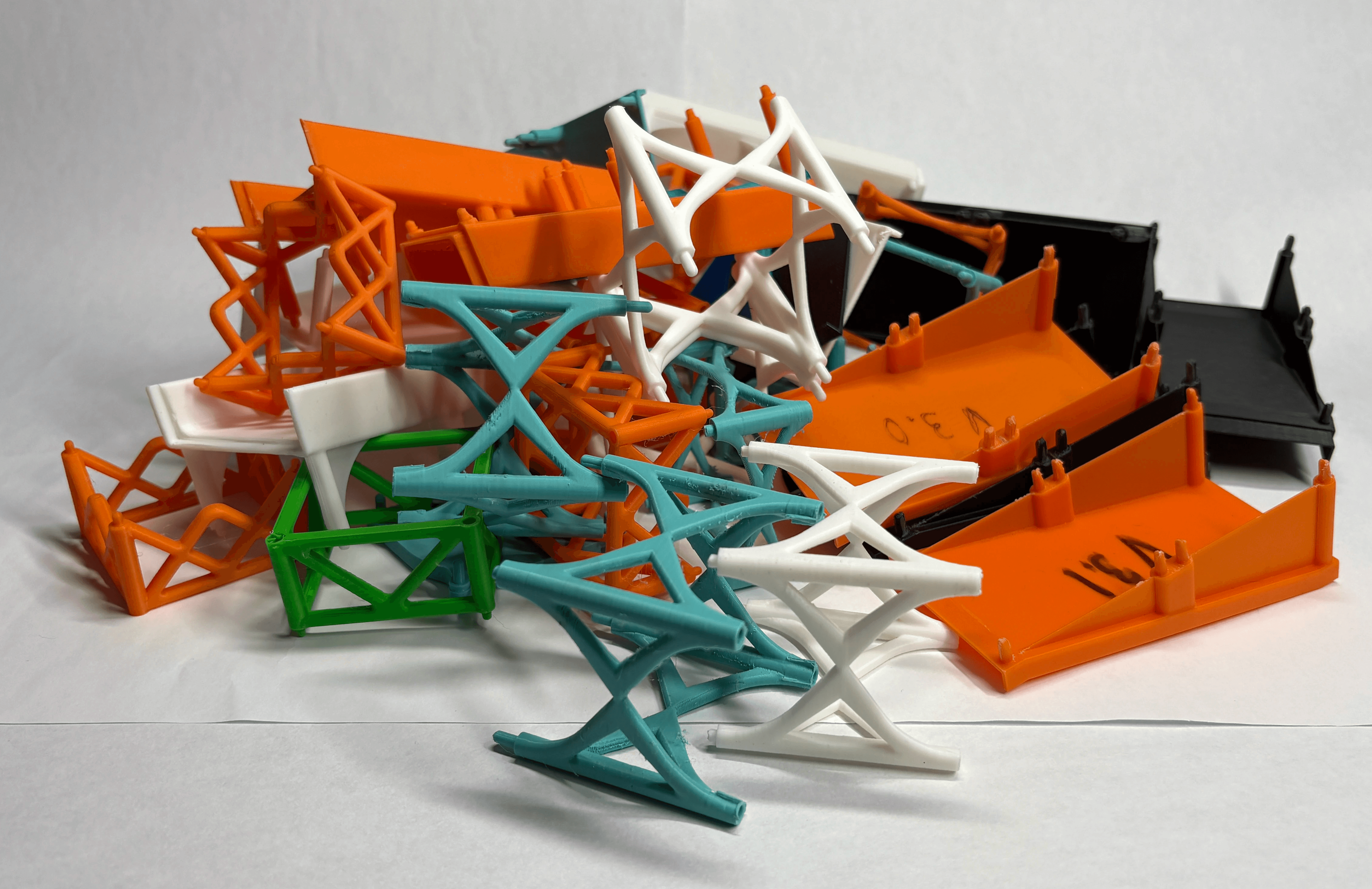
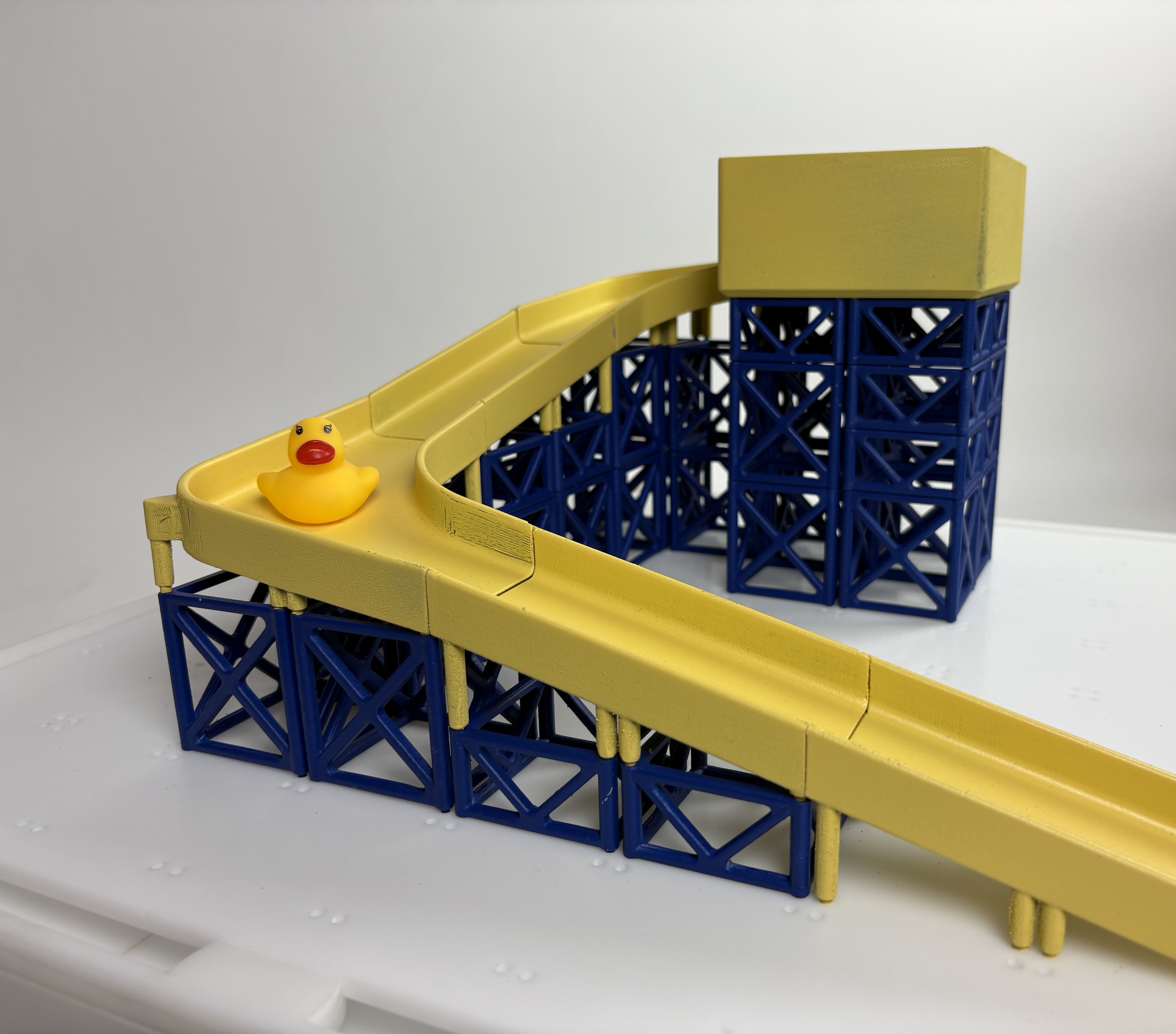
To iterate fast, I started with the simplest version of each part: pegged supports that stack up to hold sloped ducts carrying water downhill.
25+
TEST PRINTS
DUCTS
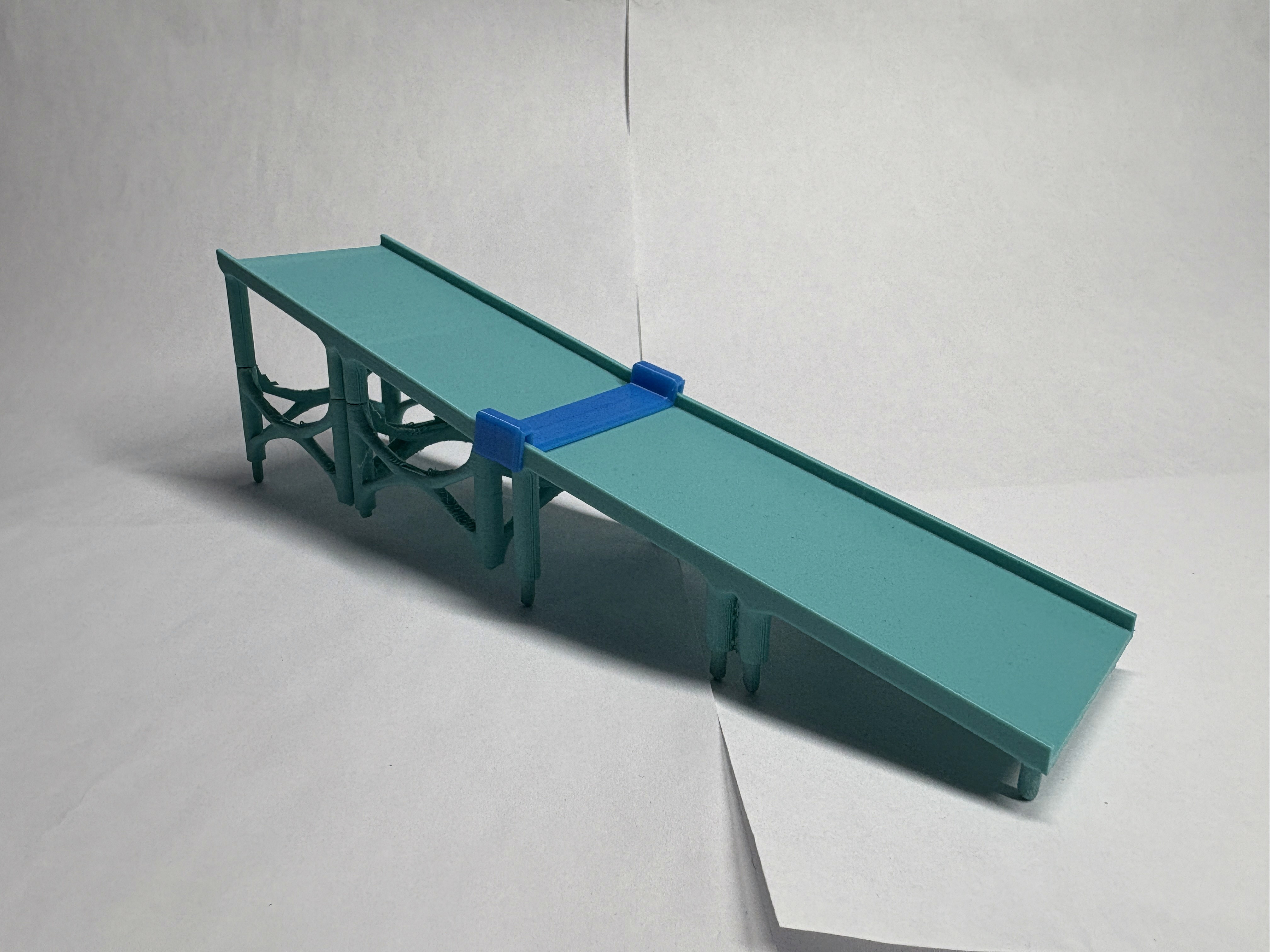
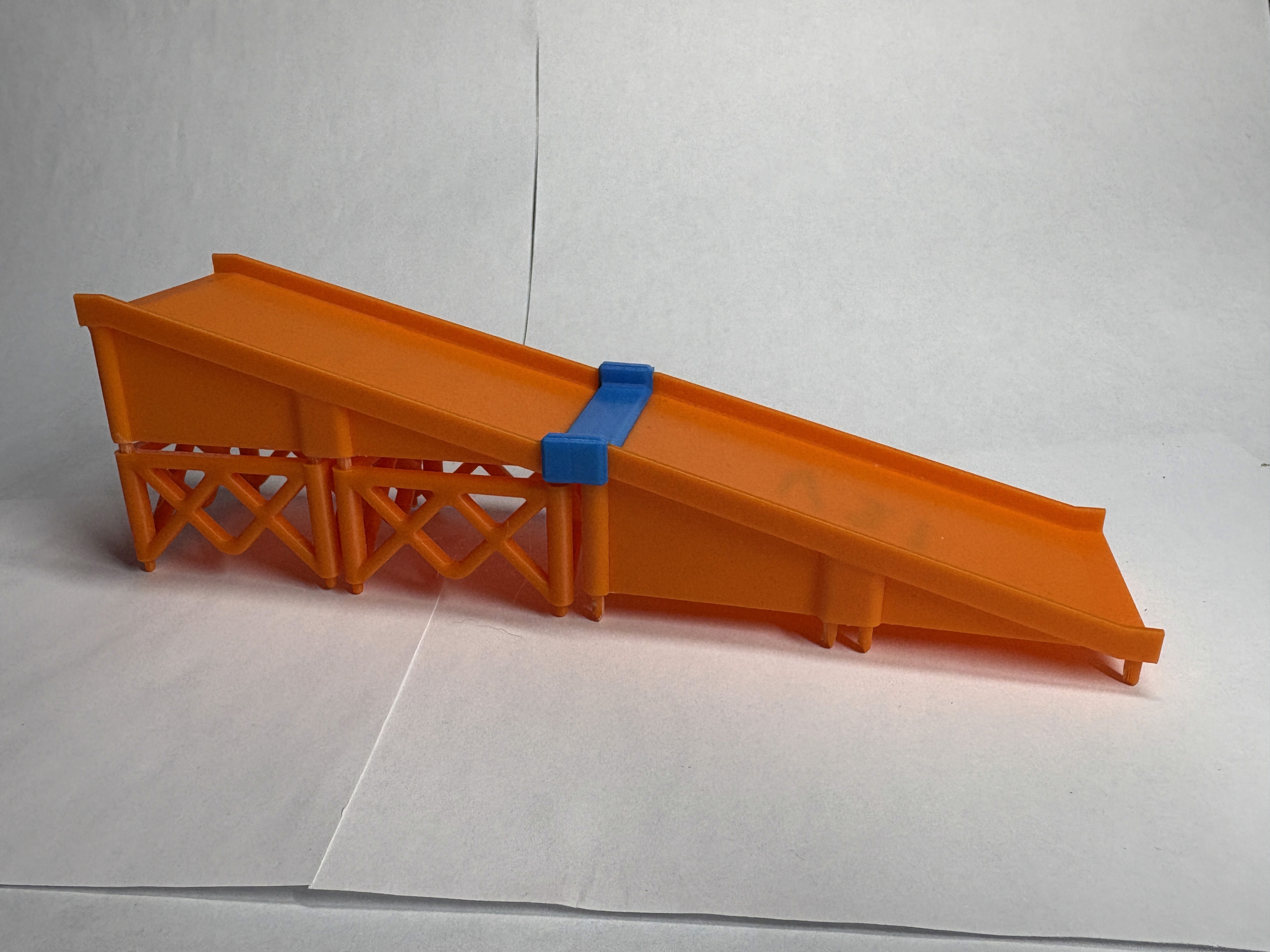
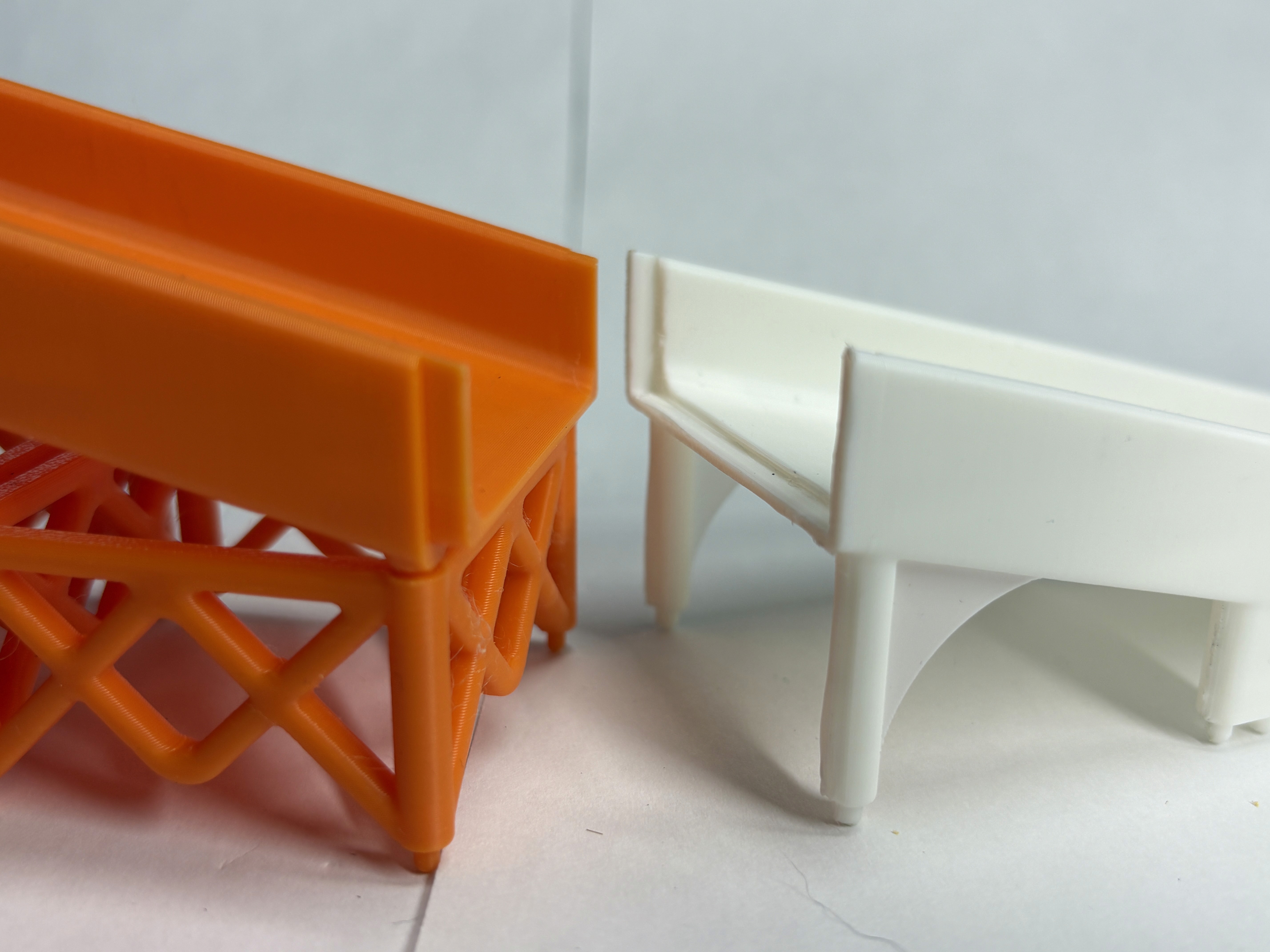
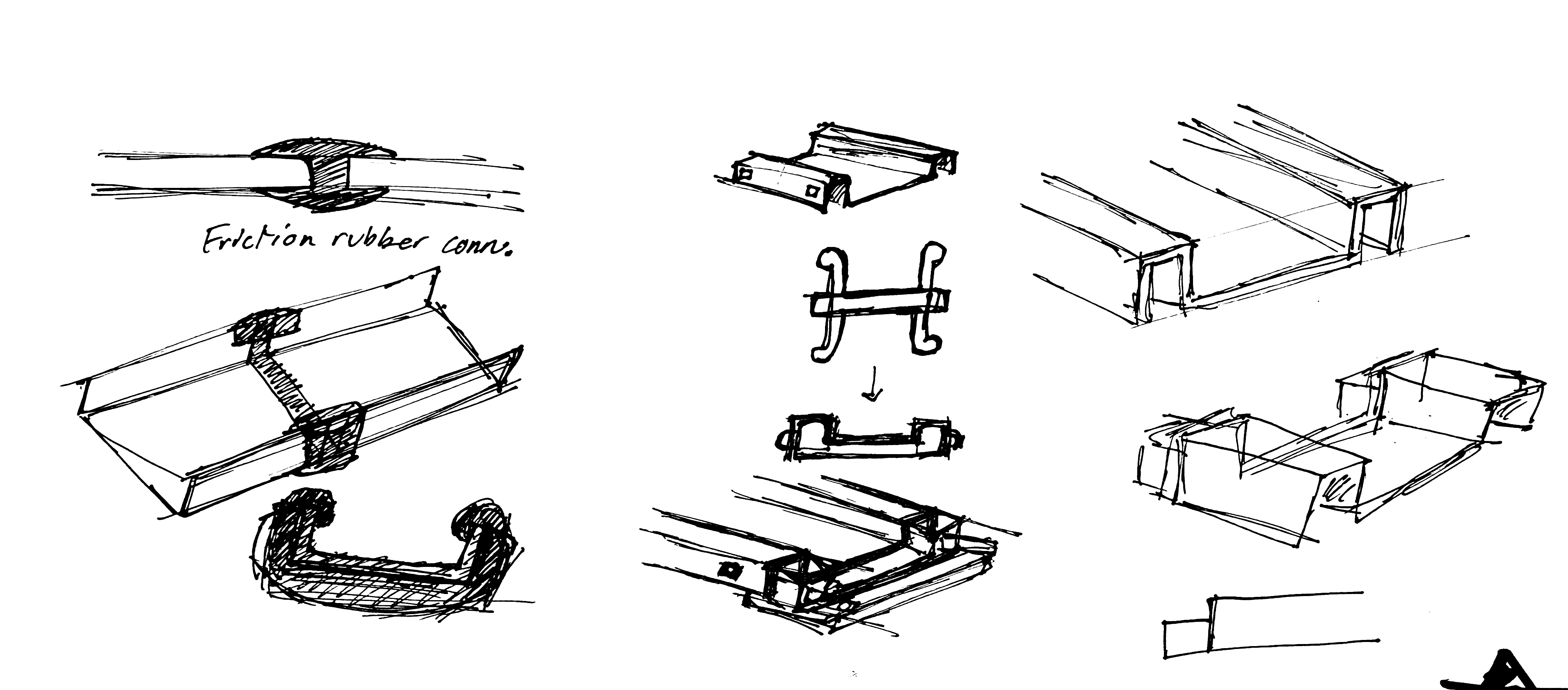
A TPU gasket sealed two ducts, but was really hard to connect.
SUPPORTS


My first supports printed cleanly, with no steep overhangs…
CONNECTORS

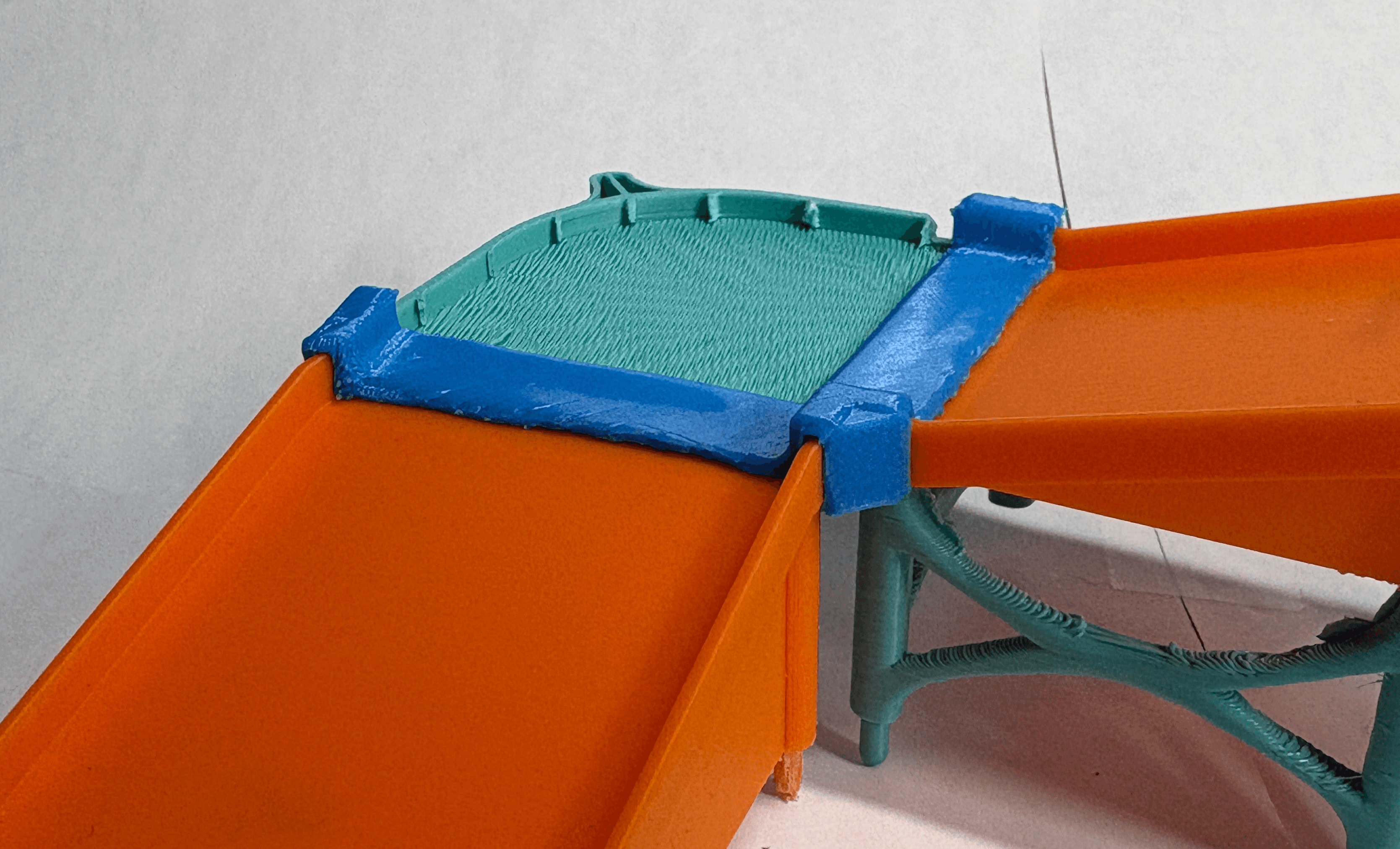


The original 90° connector could face either left or right…

PROTOTYPE
TEST BASE
A small laser-cut acrylic base let me check how supports fit the base and each other before scaling up.
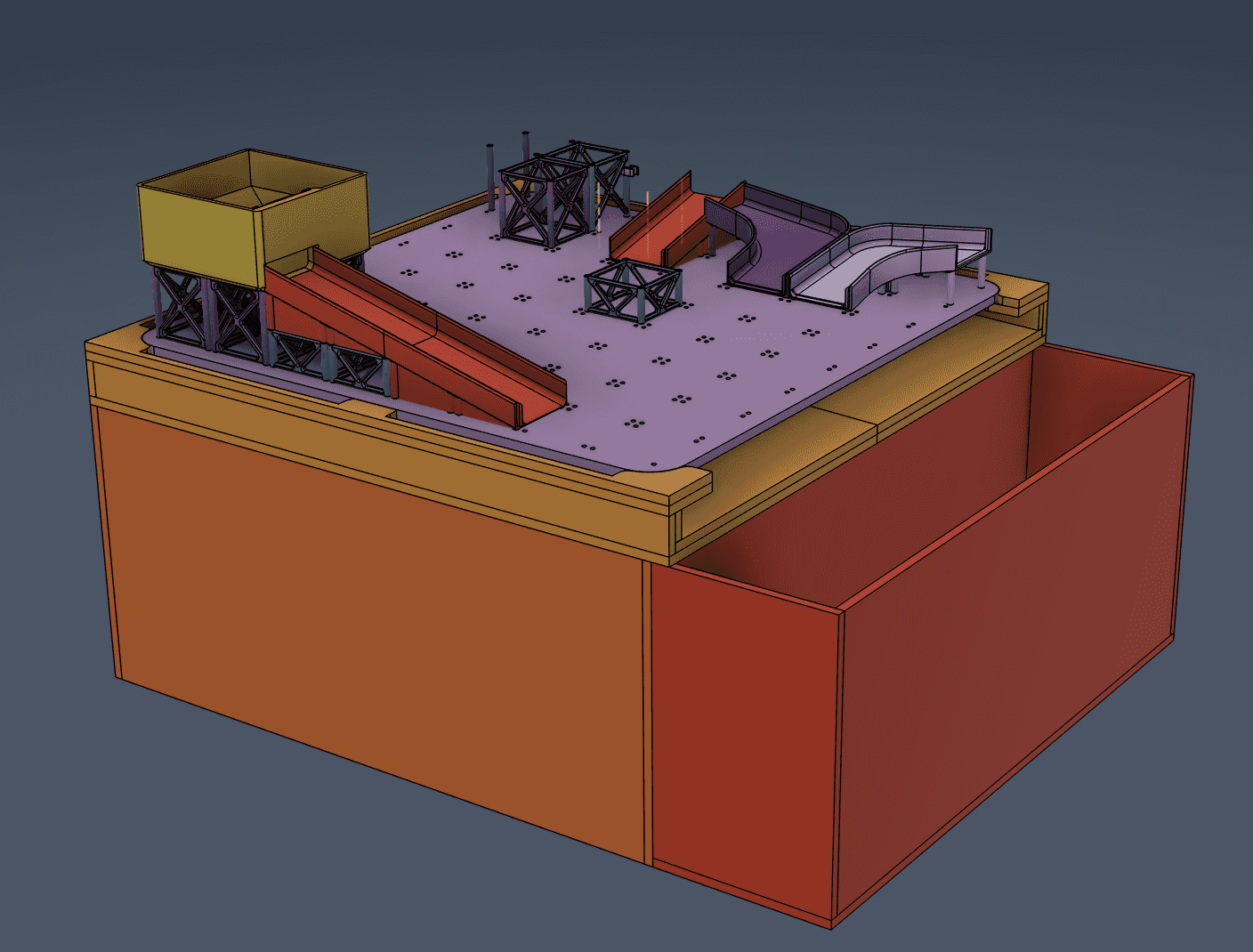
FINAL CAD
BOX & BASE
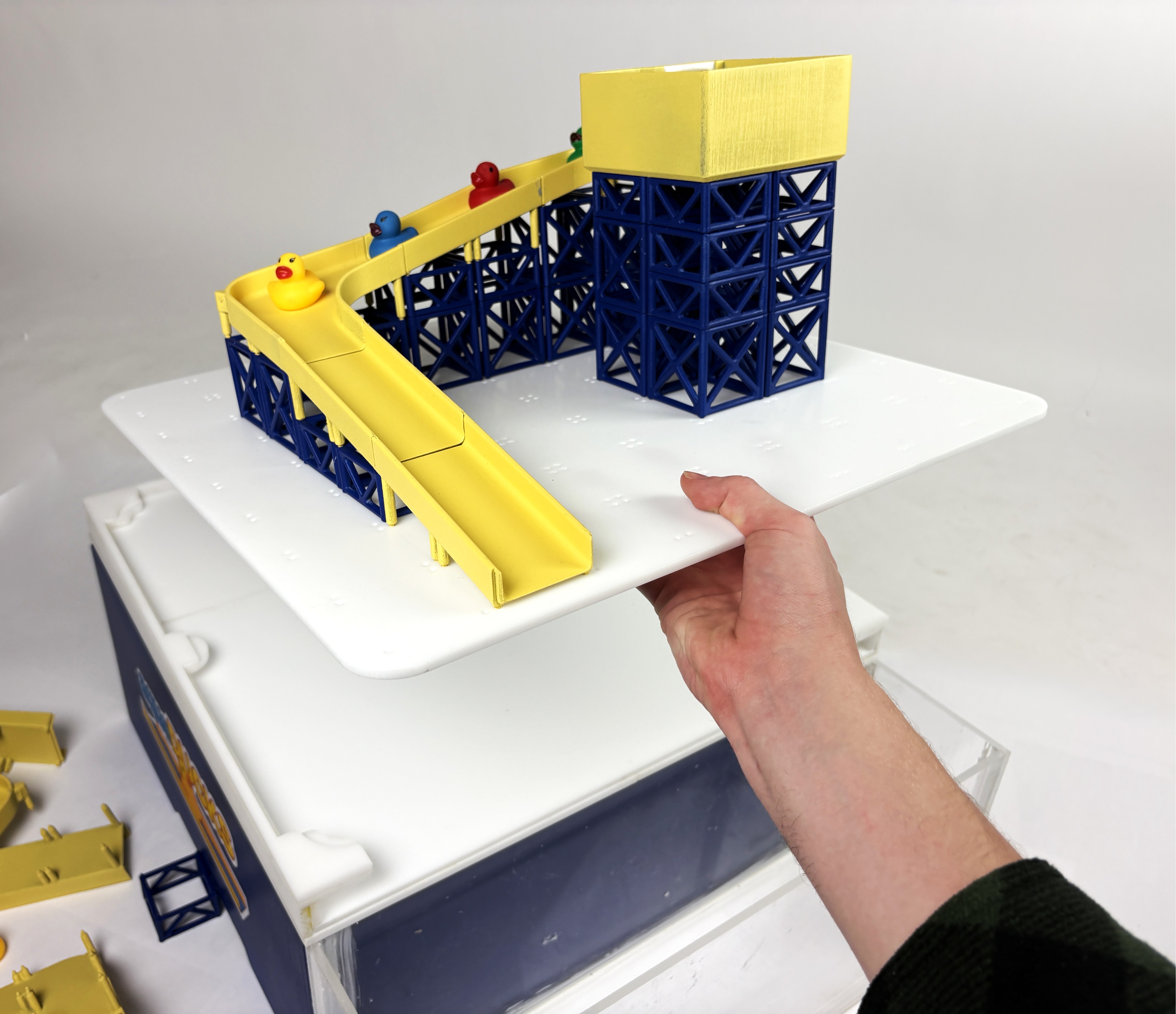
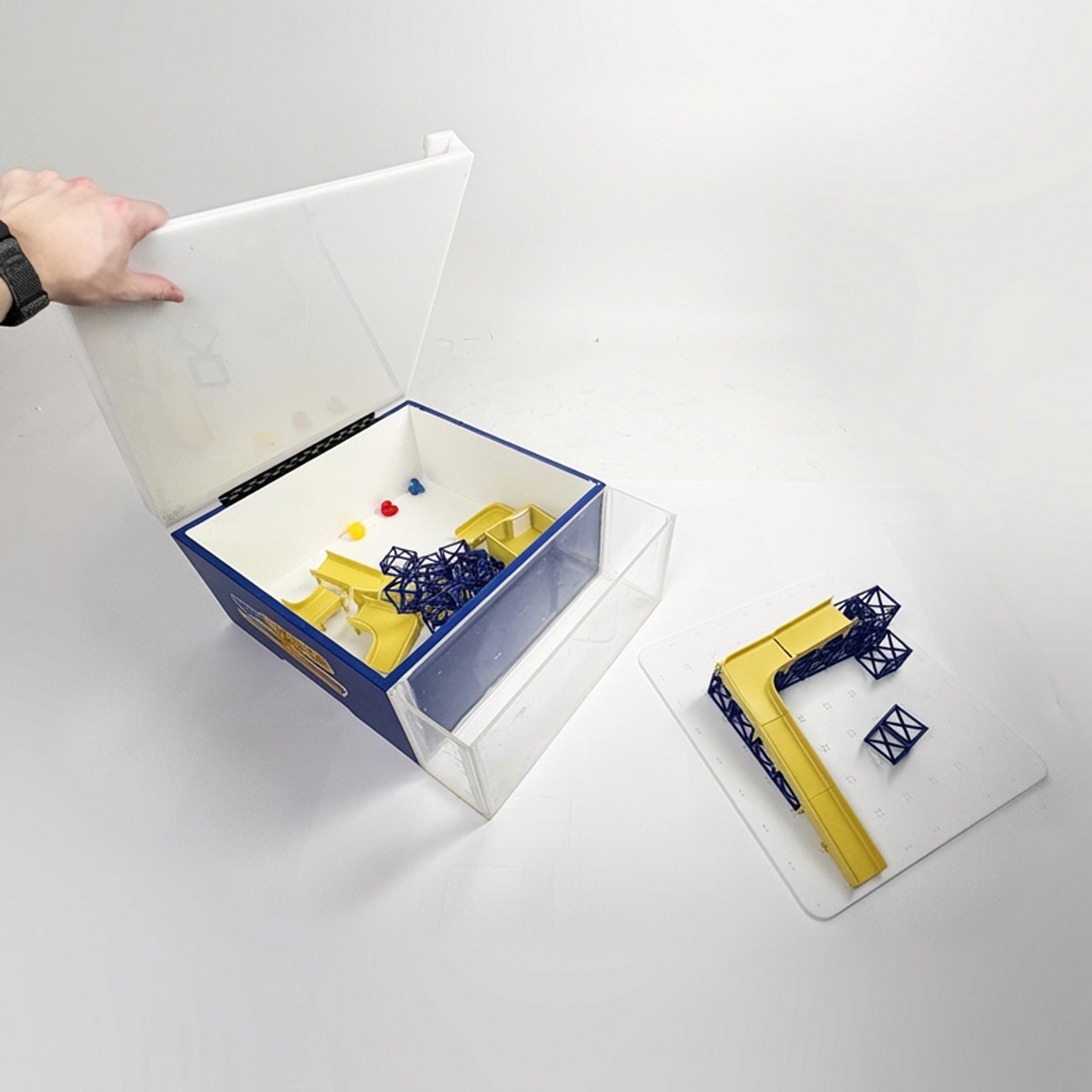
I designed the box/base in CAD around my materials. Gutters in the baseplate drain spills onto the sloped lid and into the water tank, and the box stores every part.
Final
FDM PRINTING · FINISHING · SOLVENT WELDING · MDF
FABRICATION
Every part was FDM-printed for fast iteration. The MDF box is sealed with oil-based primer and blue paint, and the acrylic lid catches most spills.
40
PIECES
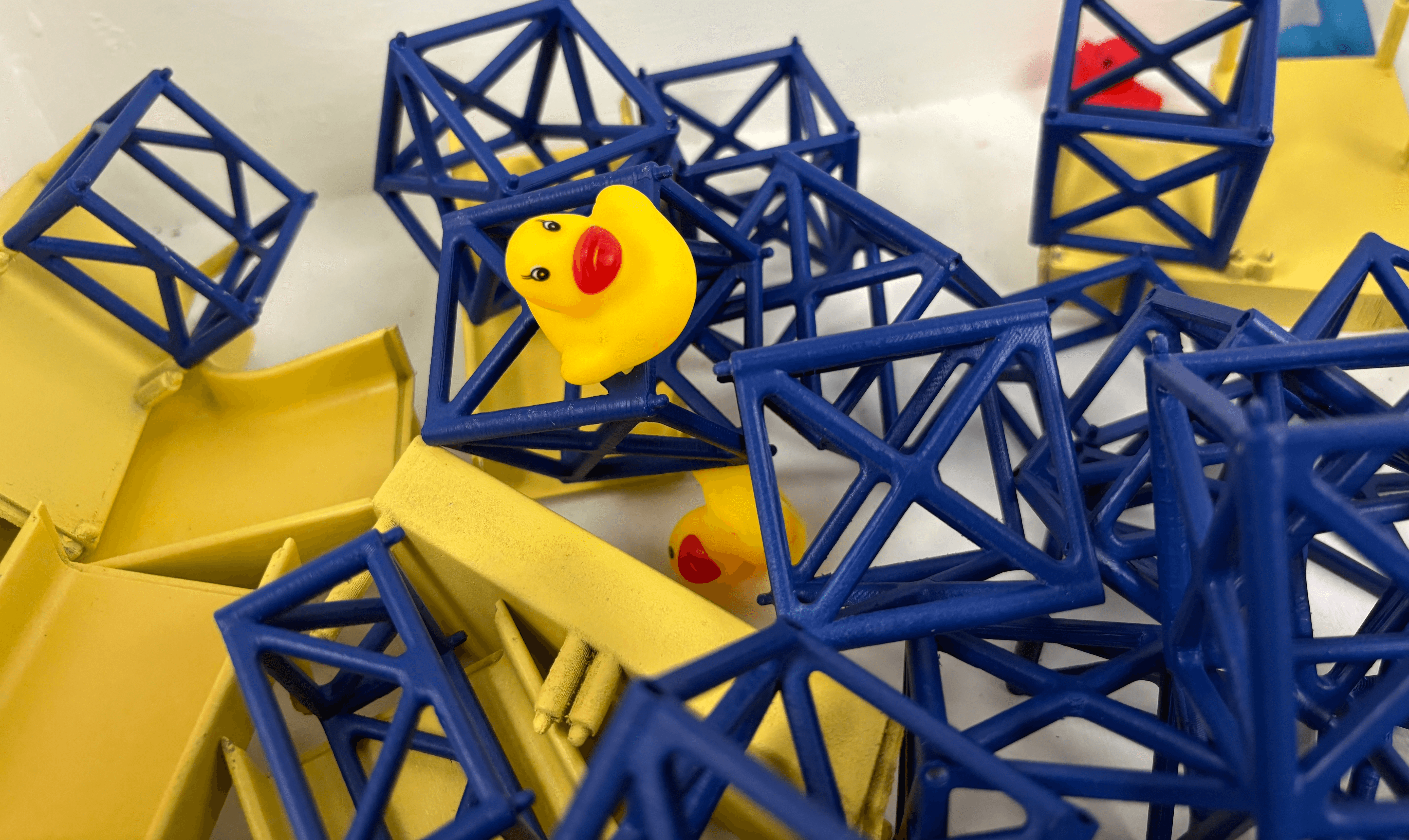
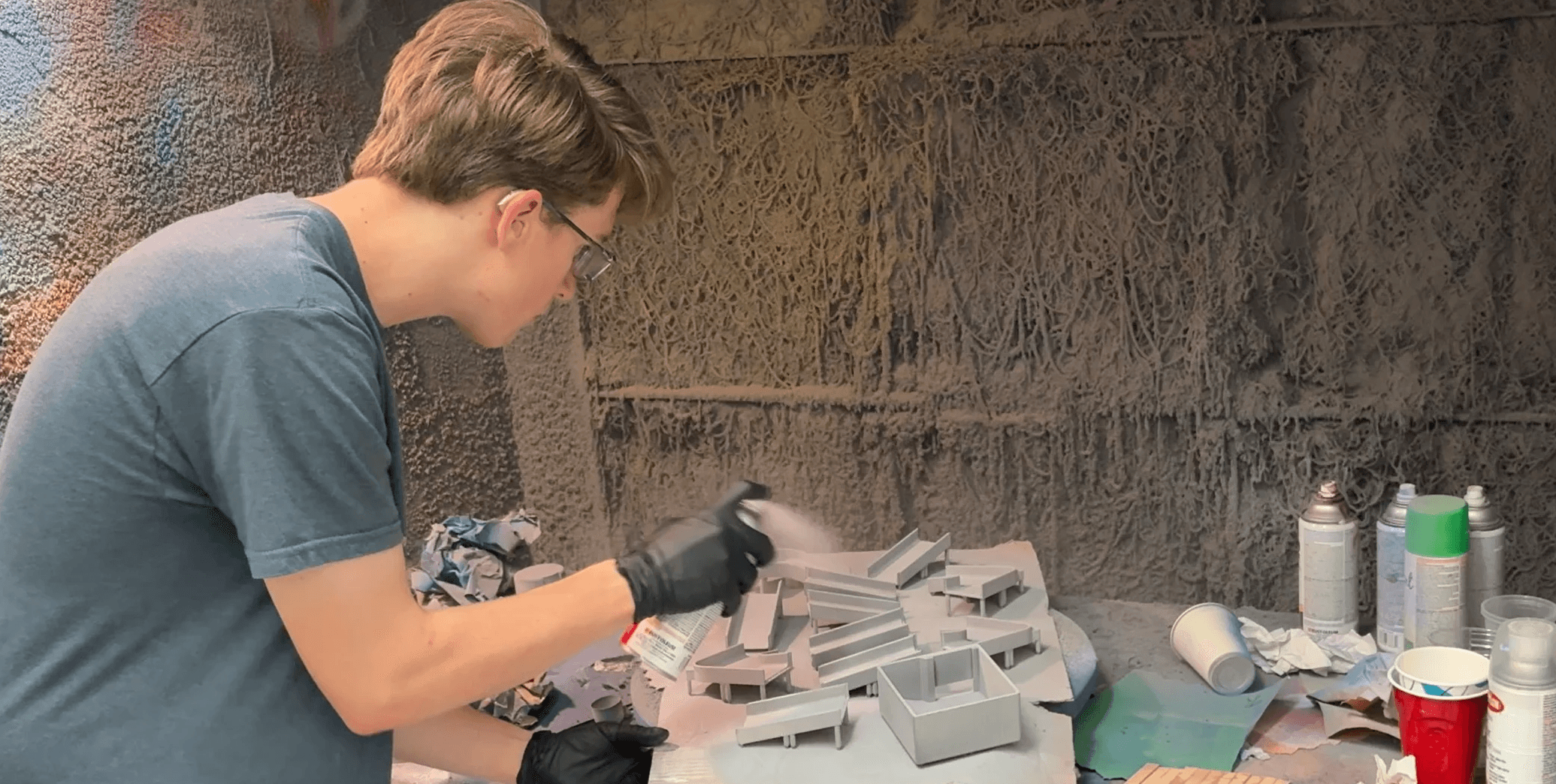
PLA parts got sanded, filled with automotive filler, and sanded again…
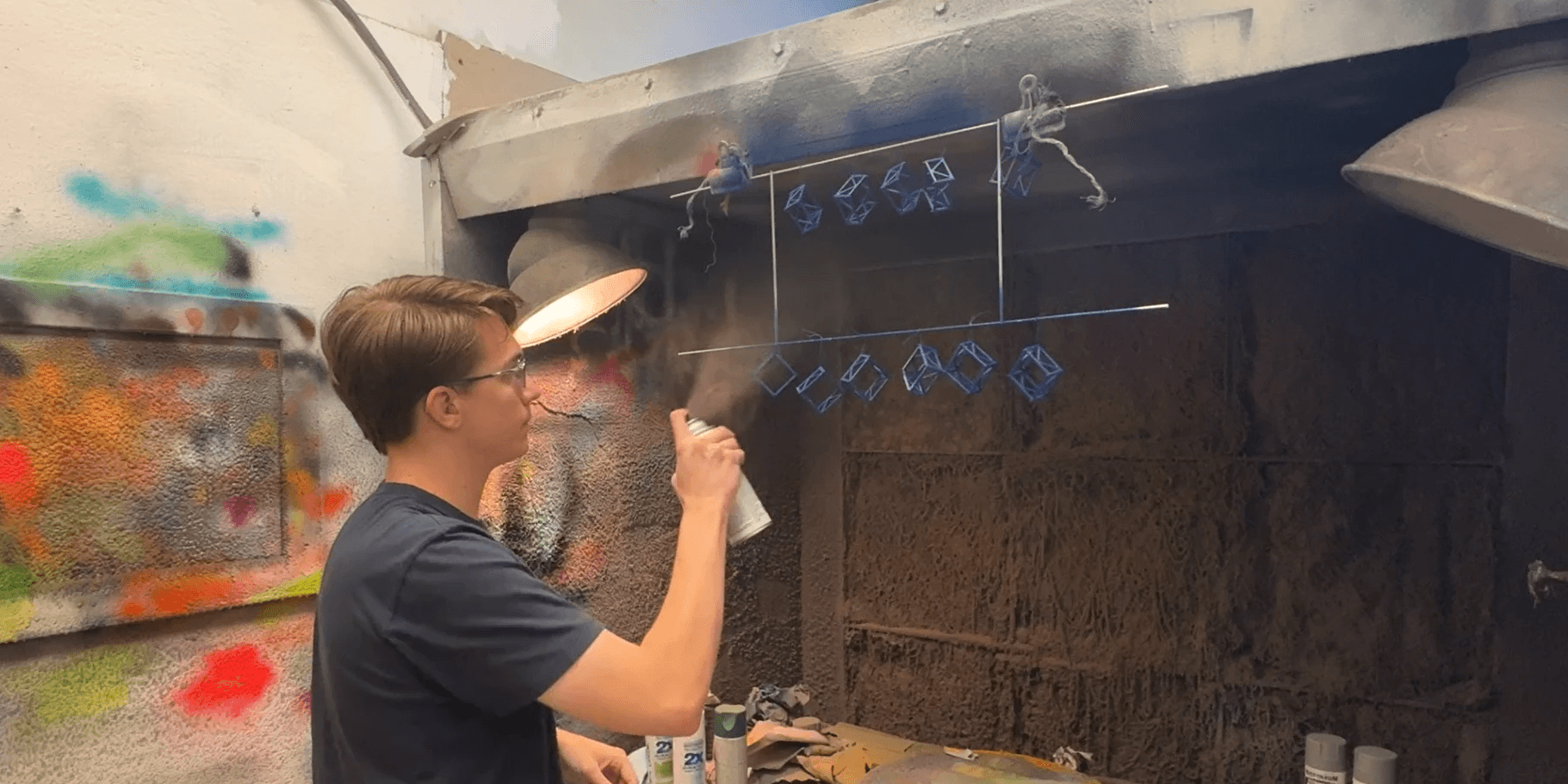
…then a color coat and clear coat for durability.
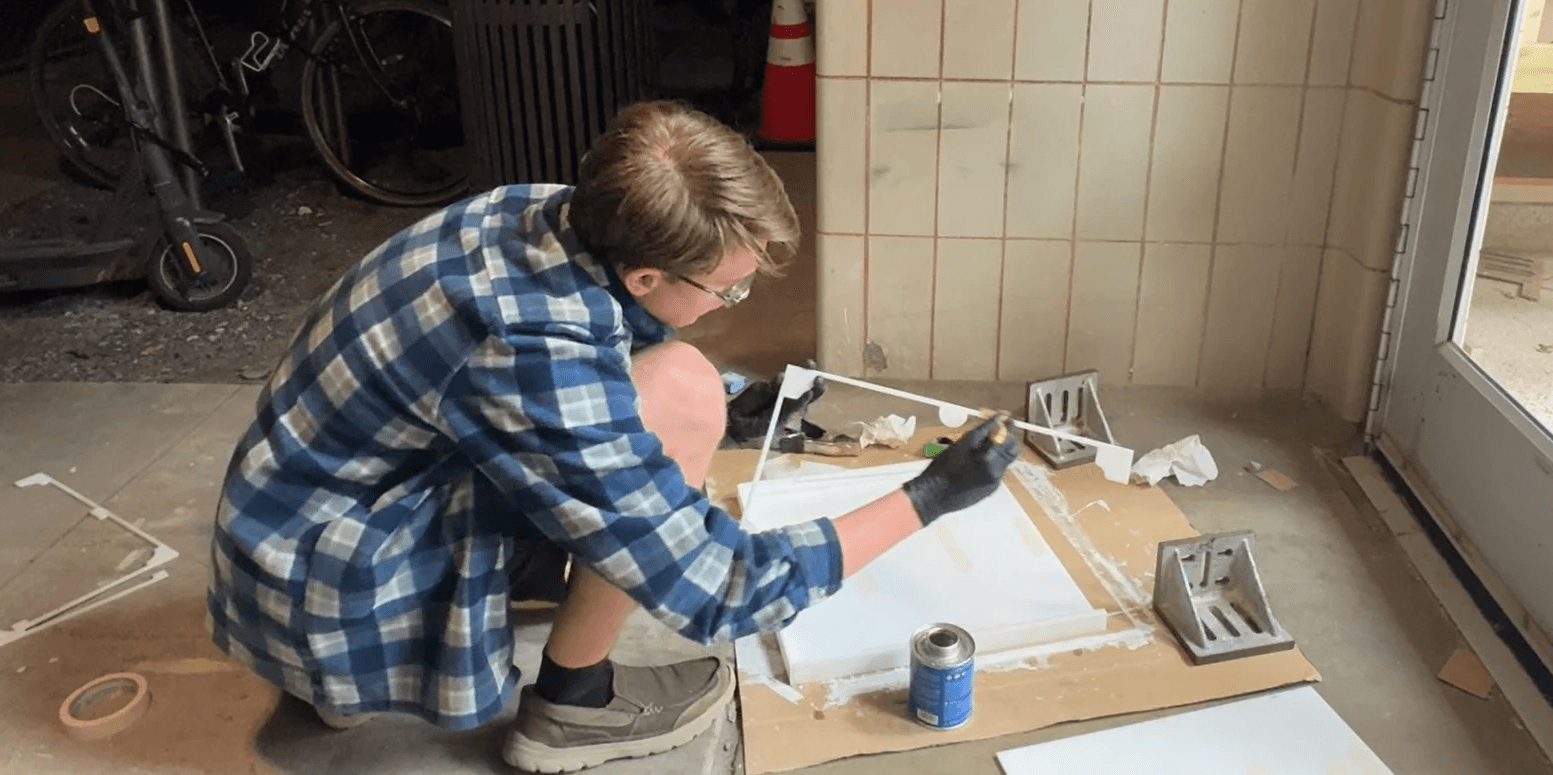
I learned solvent welding to bond the acrylic lid and reservoir with Weld-On 4.
FINAL MODEL
Introducing…


Vizcom & Photoshop
Testing
PLAYTESTING · OBSERVATION
TESTERS
Splish (4) · Splash (7)
SETTING
In-home playtest
Duration
1 hour
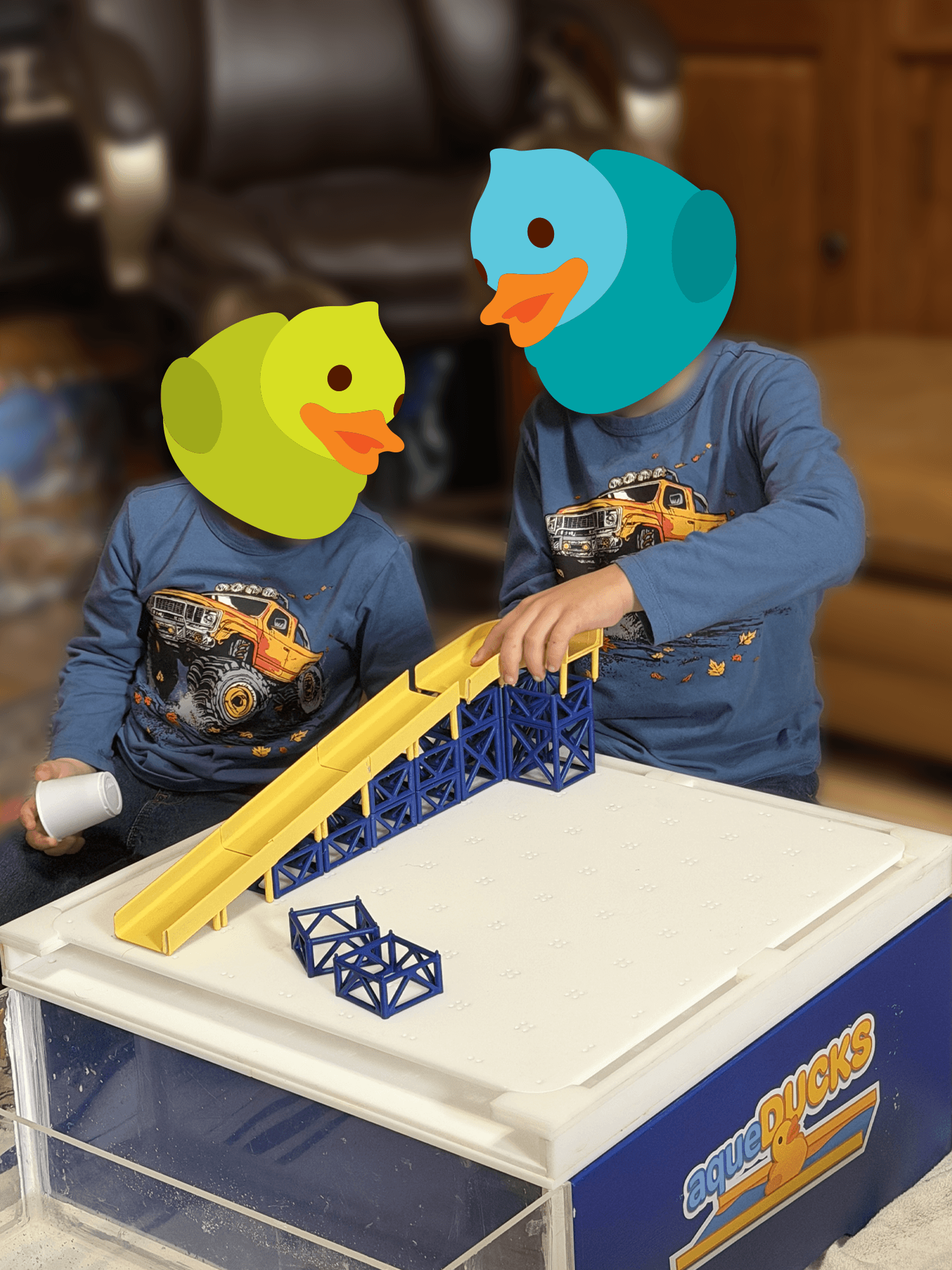
They got it fast, but the painted ramps were tricky to attach.
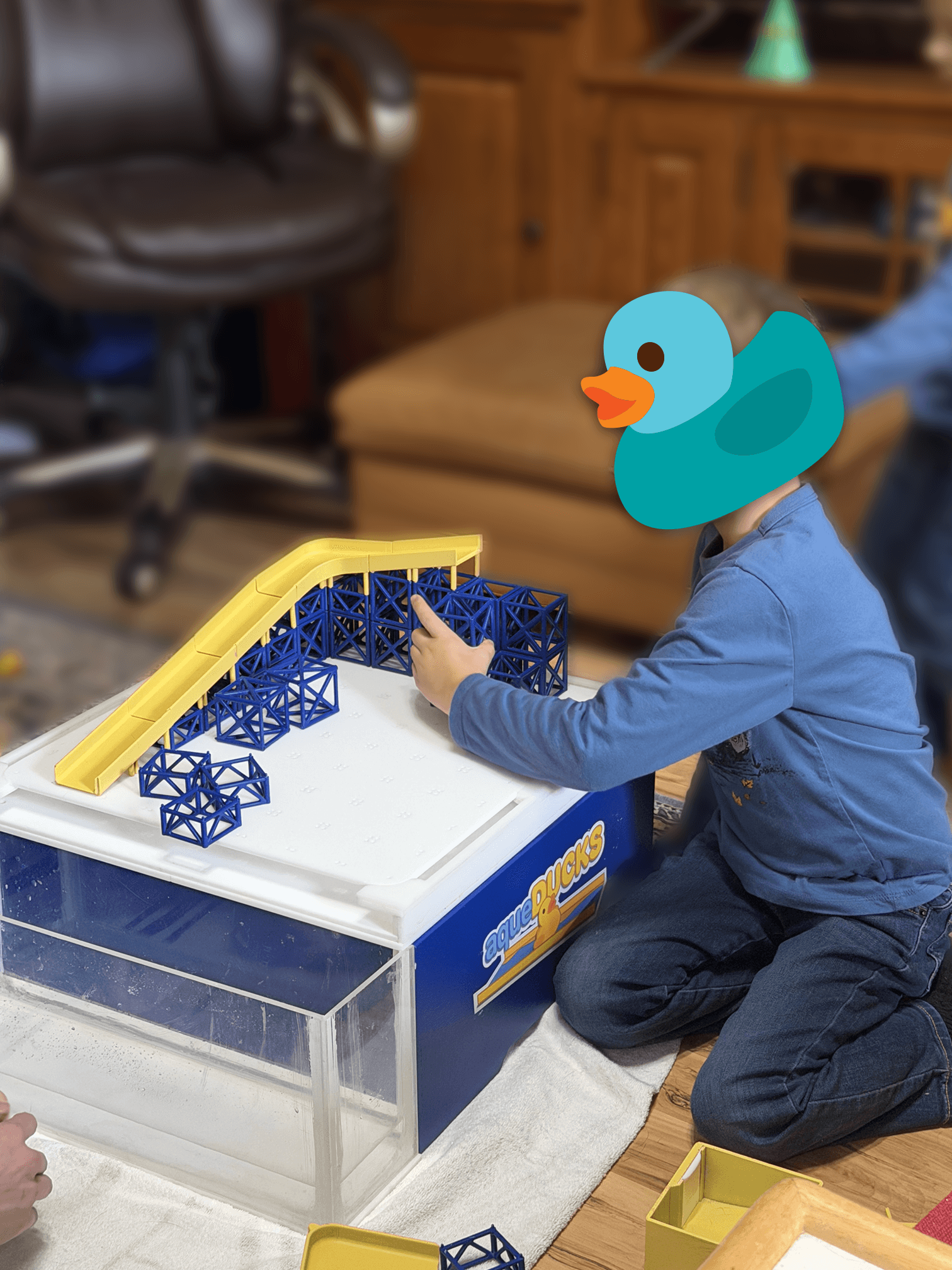
Splash built more, but both played together, a key TIMPANI goal.
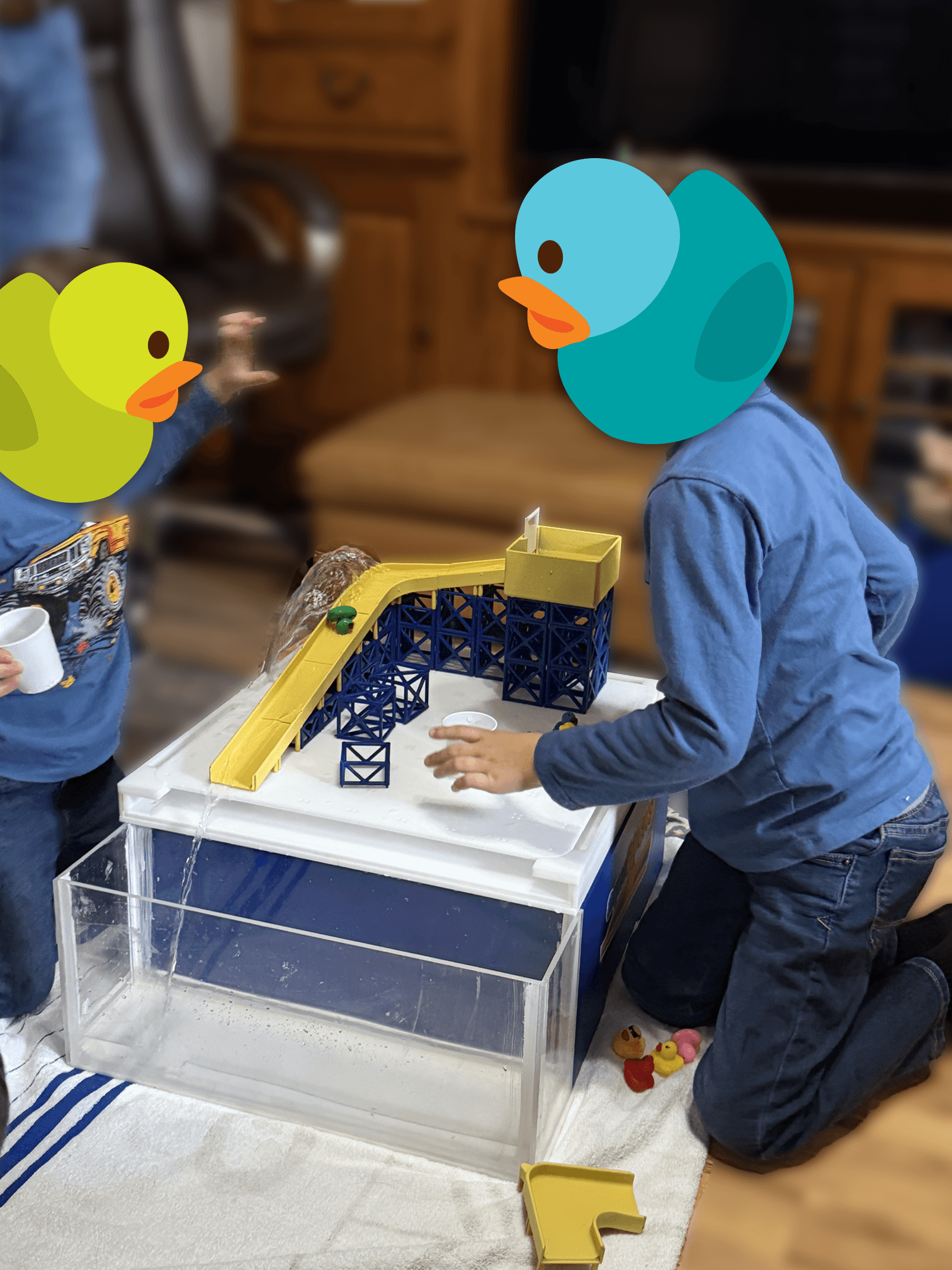
Opening the water tower was the highlight, and made a fun mess.
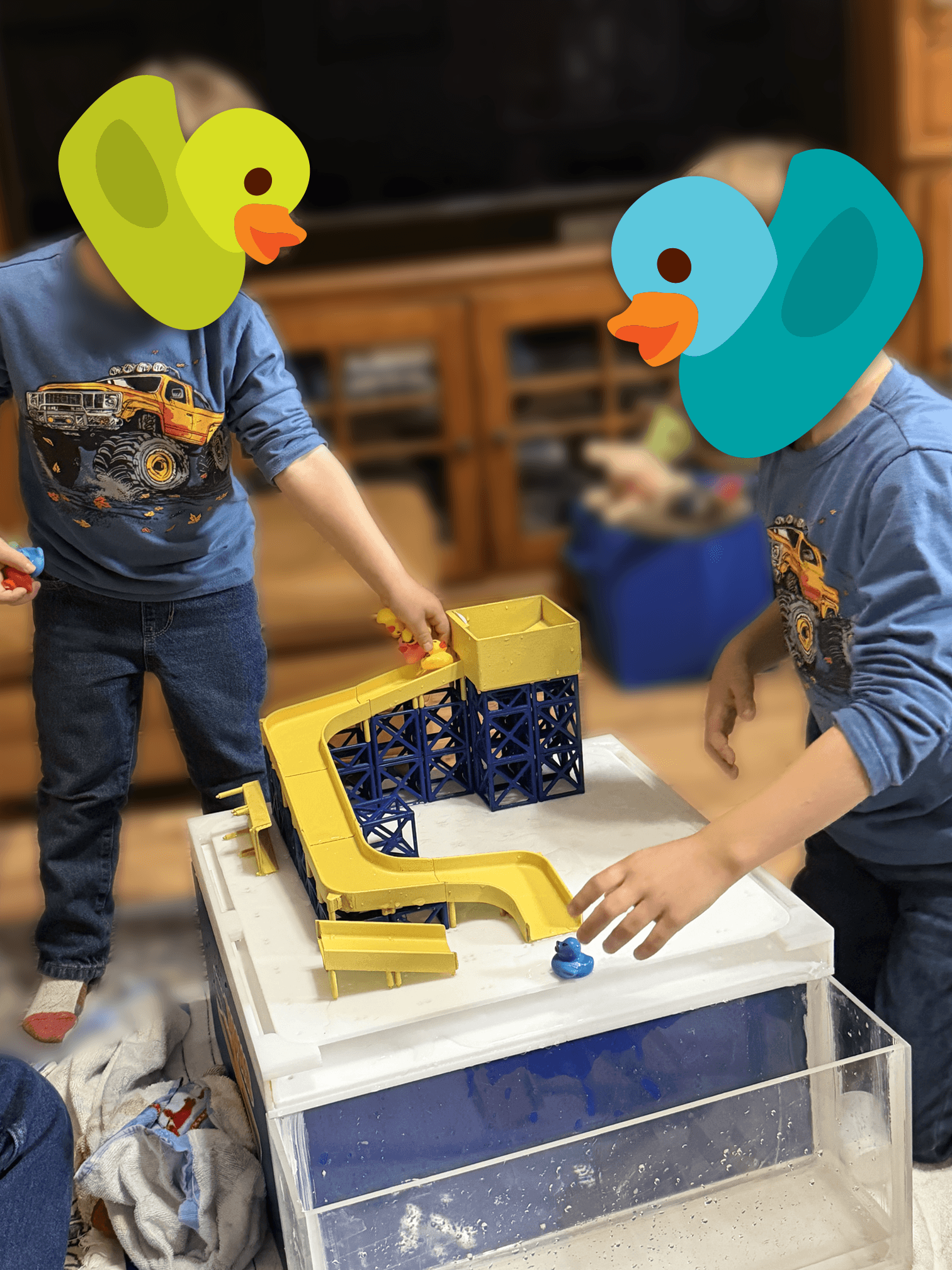
They rebuilt part of their path and tried stacking up ducks.
WHAT WORKED
Right age range: Splash (7) was the most engaged.
Scale and dexterity felt right for small hands.
Two kids could easily build and play together.
Watching the water flow kept them hooked.
WHAT I’D FIX
Connections were tricky to assemble and change.
Ramp walls need to be taller and curve inward.
The water tower dumps water all at once.
Ducks get stuck, especially several at once.
“AqueDucks is my favorite toy ever!”
— SPLASH, AGE 7
Debrief
The Summary
In five and a half weeks, I took AqueDucks from research on how 6–7-year-olds learn to a working water-play building set. What I’m proudest of is the playtest: two kids built their own aqueduct, sent ducks racing down it, and Splash called it his favorite toy ever.
What I’d Do Next
Next, I’d make building smoother with simpler, more forgiving joints, taller ramp walls that curl inward, and low-friction ramps so ducks stop getting stuck. I’d also replace the water tower with a hand pump or water wheel for steadier flow, and lighten the set so kids can set up and clean up themselves.